

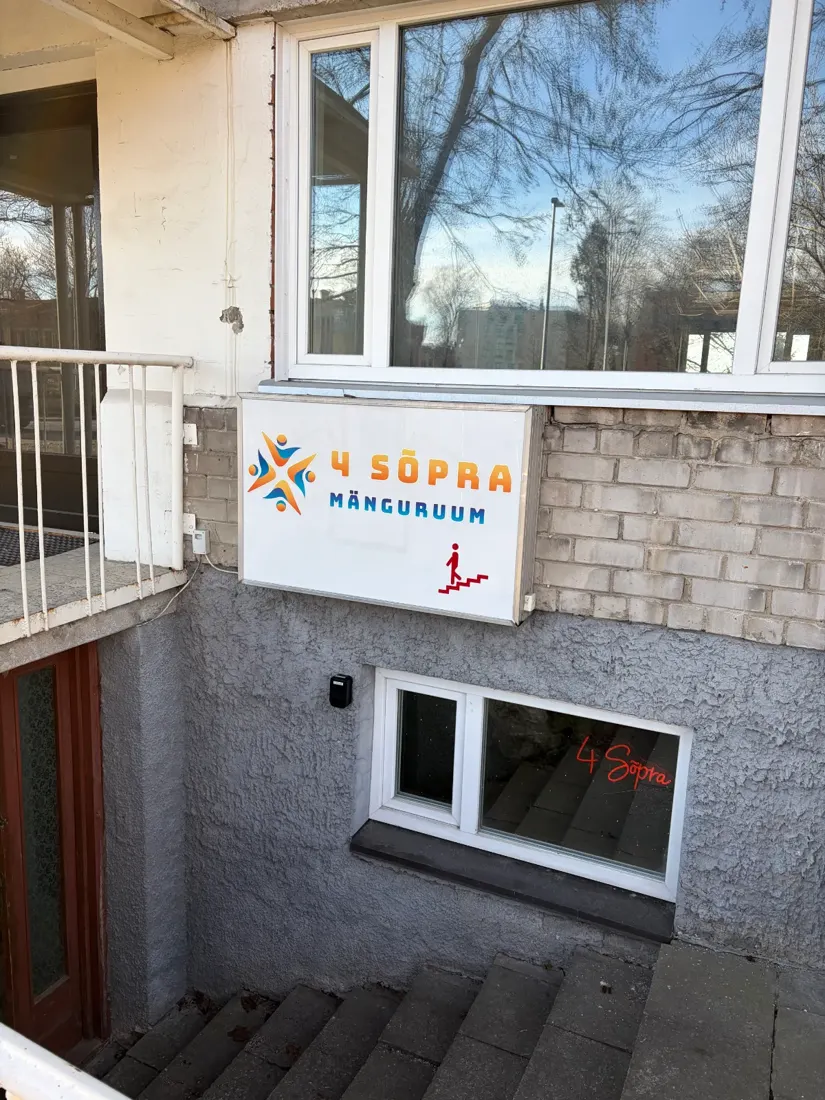
Private game room · Tondi 50, Tallinn

Play and make memories together

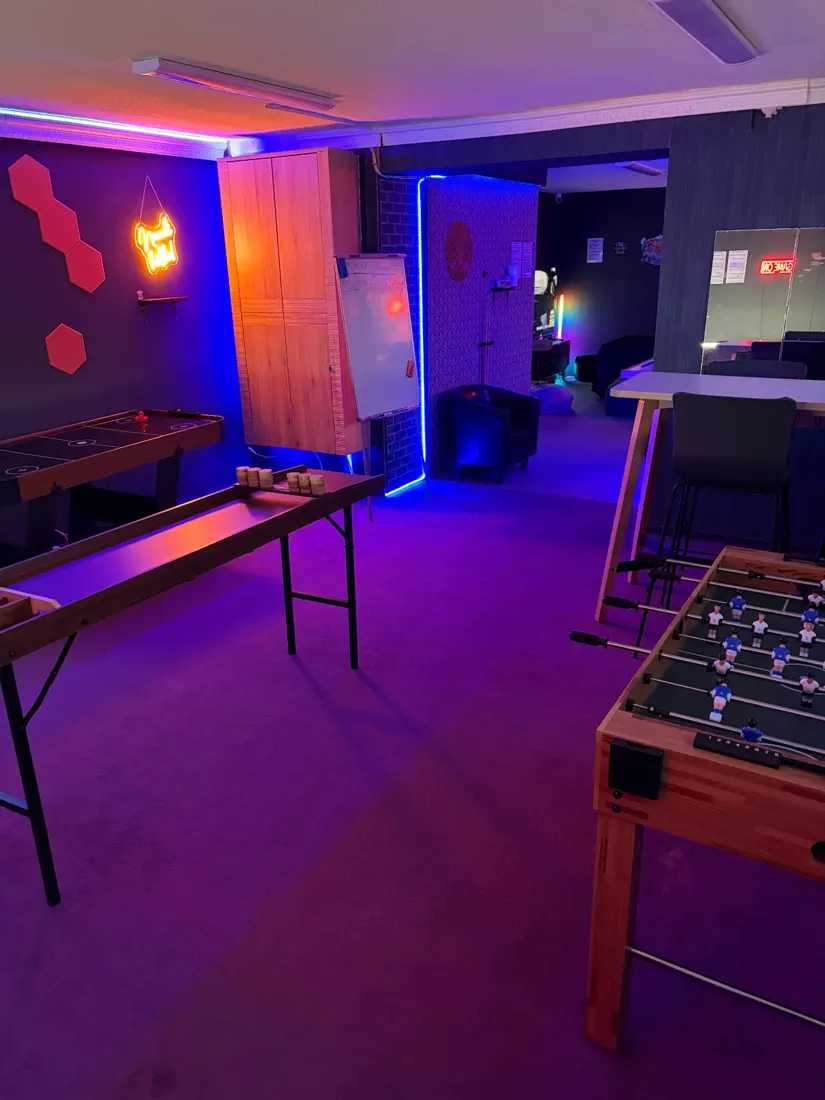
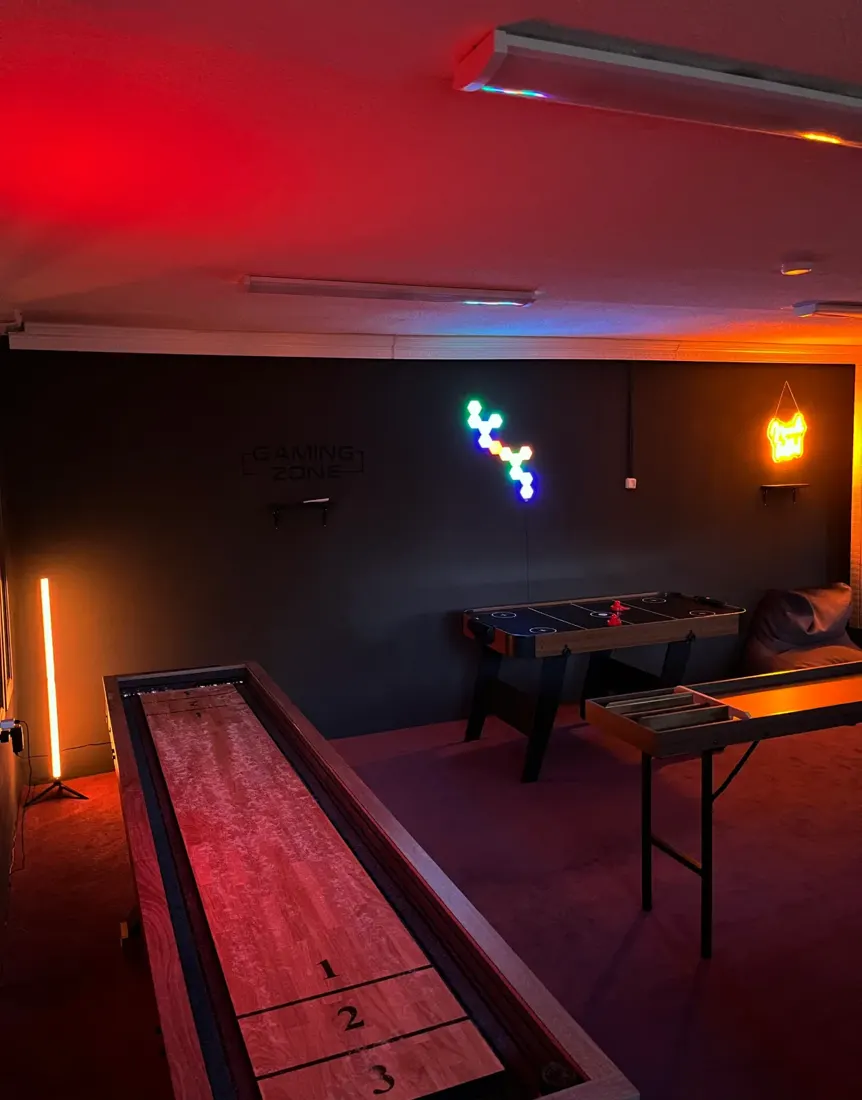
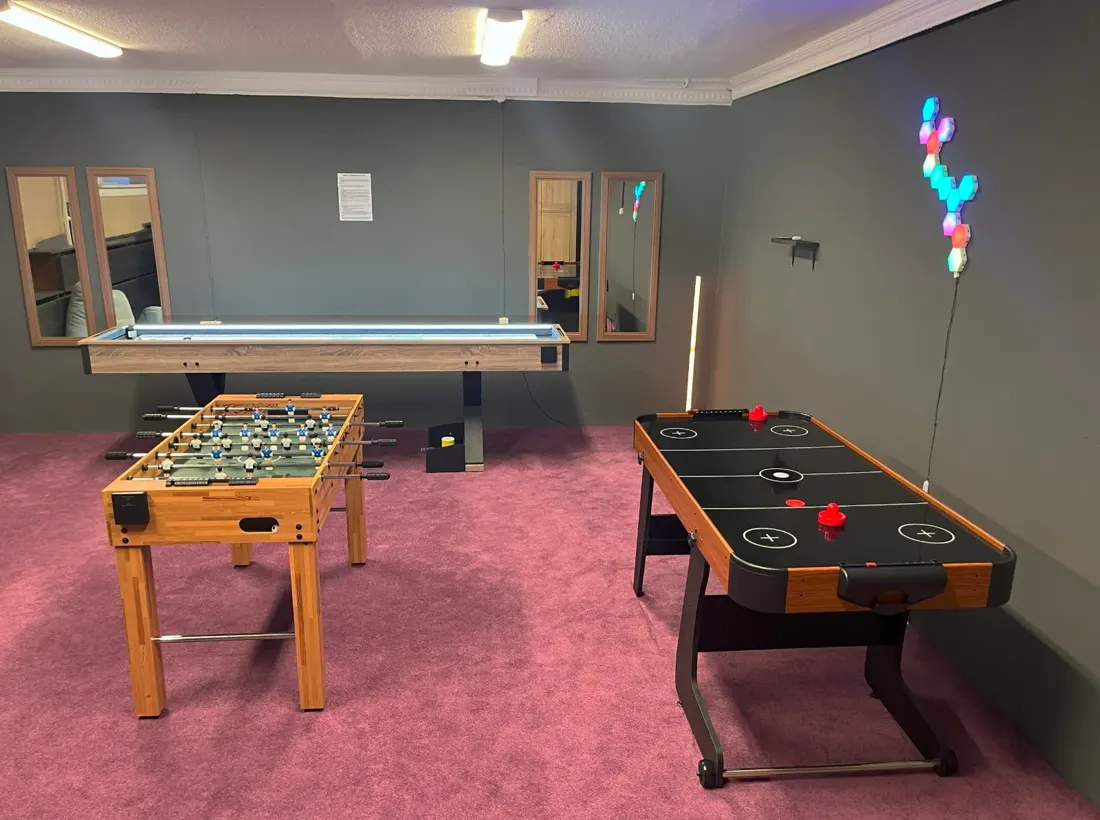
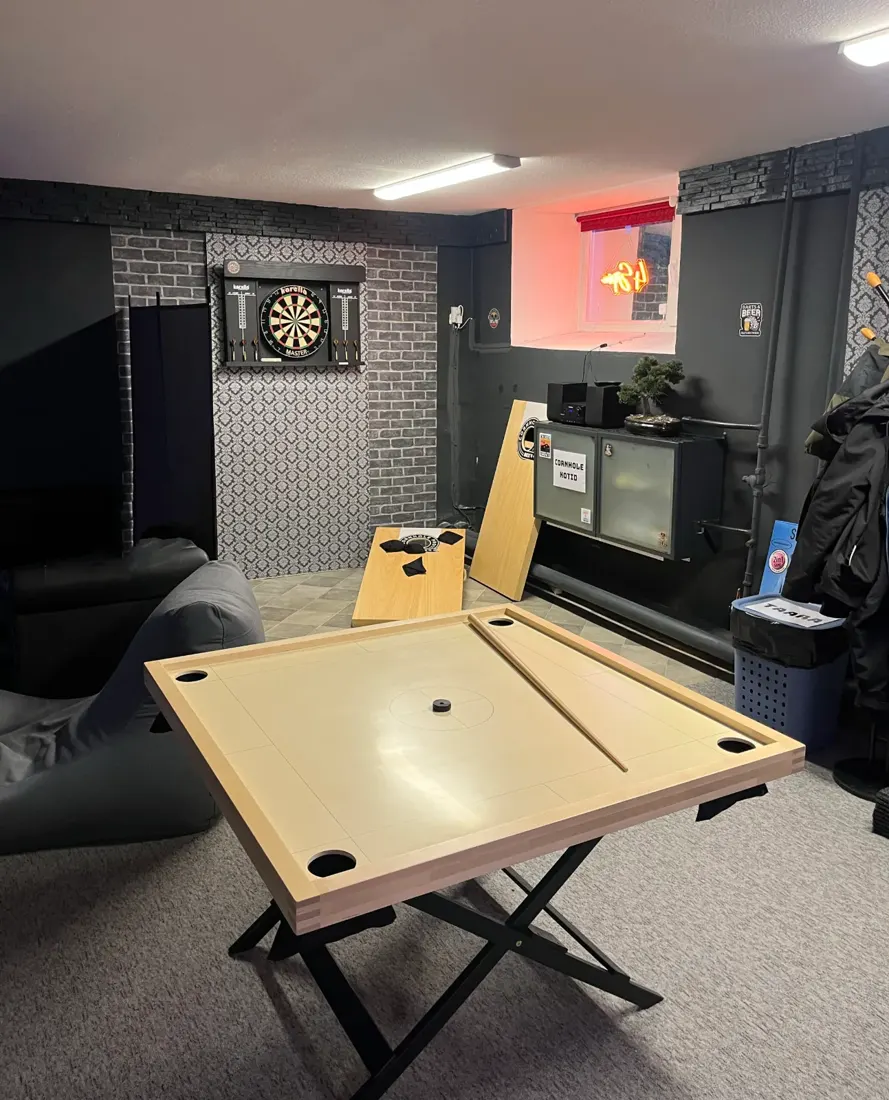
A 70 m² game room with darts, air hockey, shuffleboard, koroona and plenty more. While you're booked, the room belongs to your group alone.

  • 70 m²private room
  • up to 20people at once
  • 2 hminimum booking
  • 10–22every day
  • freeparking
Game room

Every game in one room

Switch games as often as you like, take a snack break and carry on. Rules for every game are on the walls in Estonian and English.

  • Darts
  • Air hockey
  • Shuffleboard and bowling
  • Cornhole
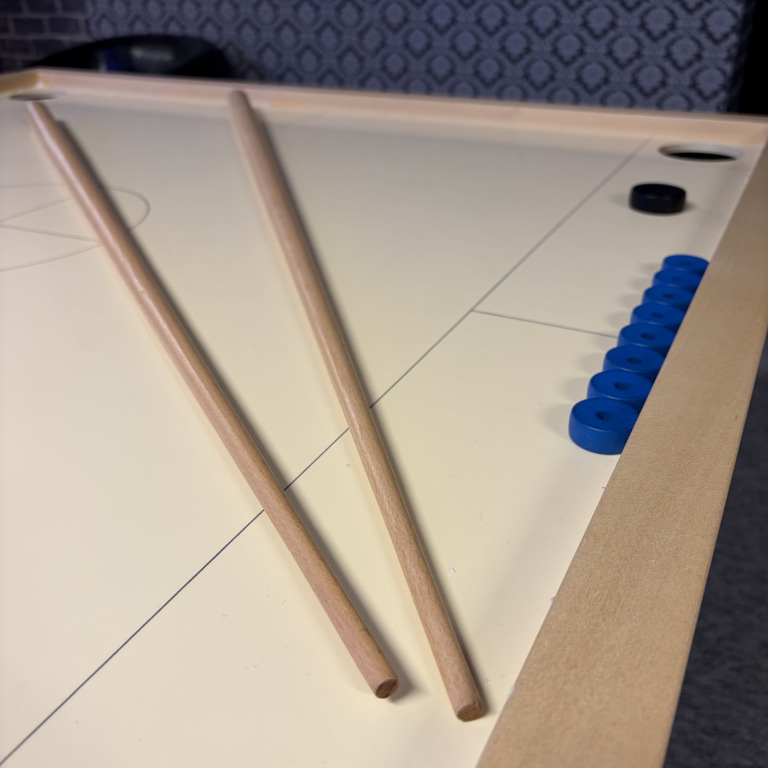
  • Koroona
  • Sjoelbak
  • Table football
  • VR headset
  • Karaoke

Besides the games

  • Coffee and tea are free; fridge drinks are 2 € each (cash).
  • Bring your own food and drinks or order delivery. There's a coffee machine, a microwave and disposable tableware.
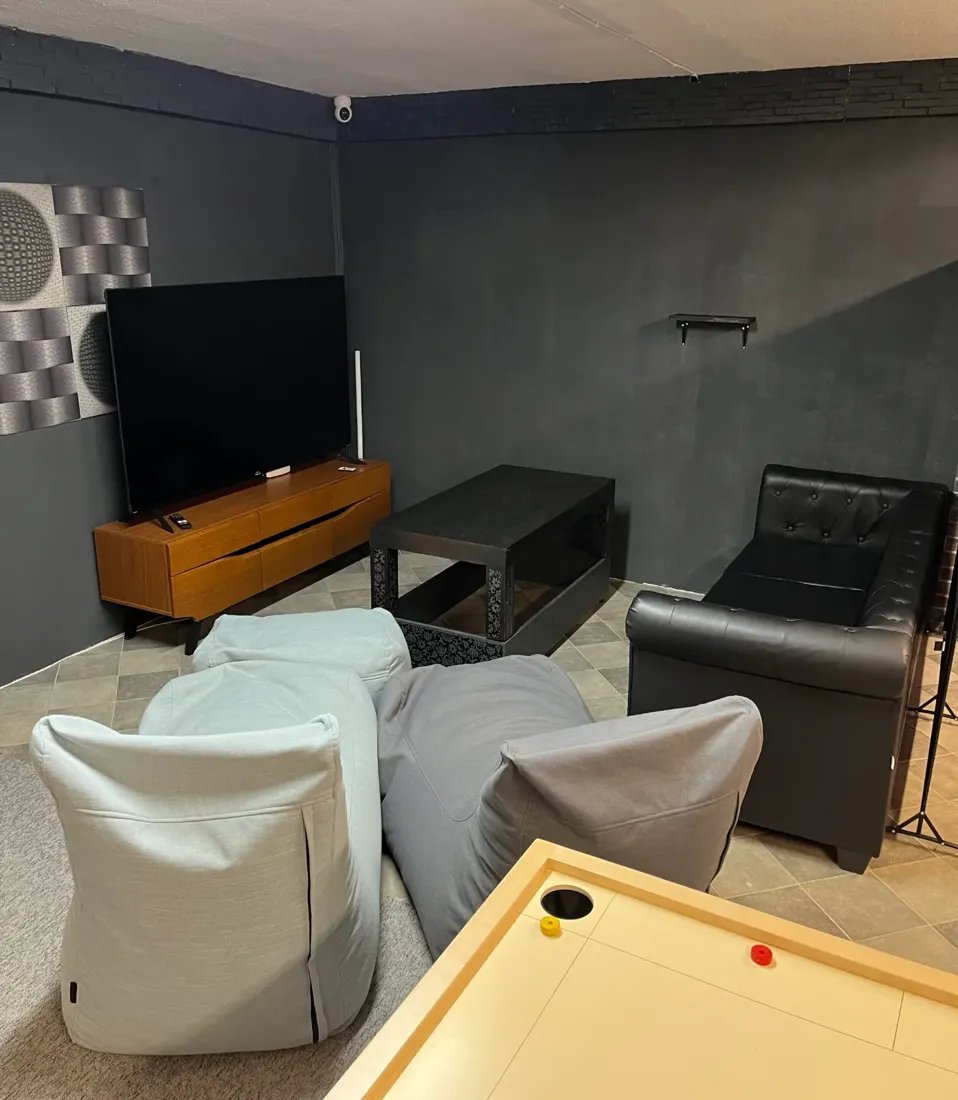
  • Big TV with Go3 Sport and Netflix Premium, plus a JBL speaker for your own music.
  • Private WC and seats for everyone.
  • Games suit ages 10 and up. Guests 18+ may drink alcohol in moderation.
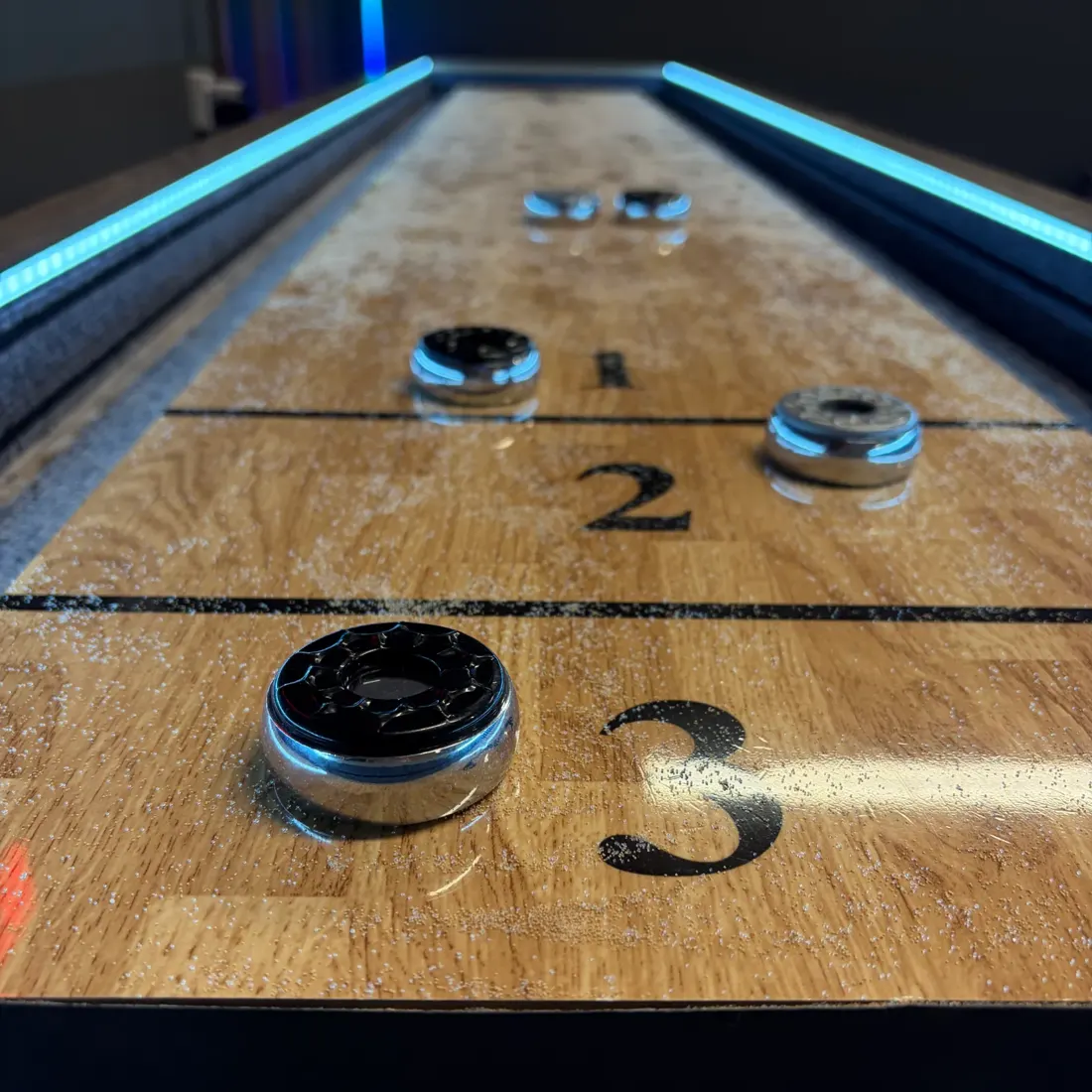
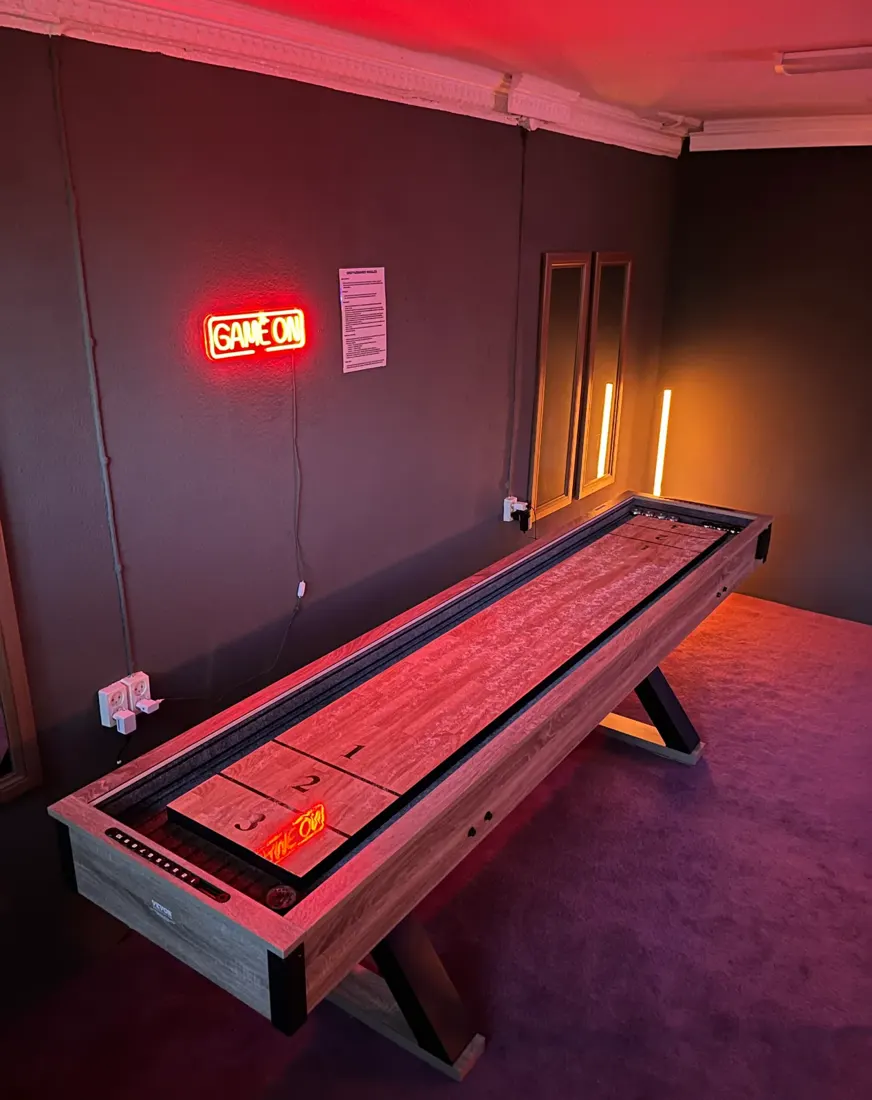
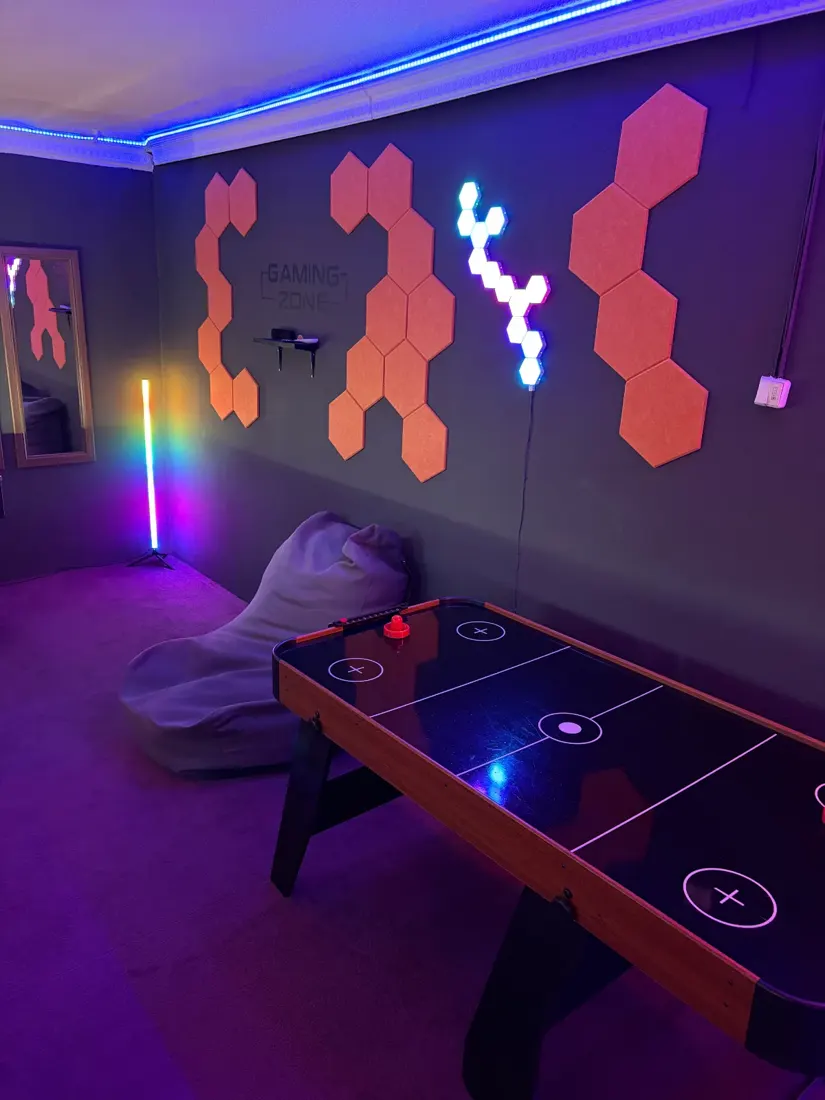
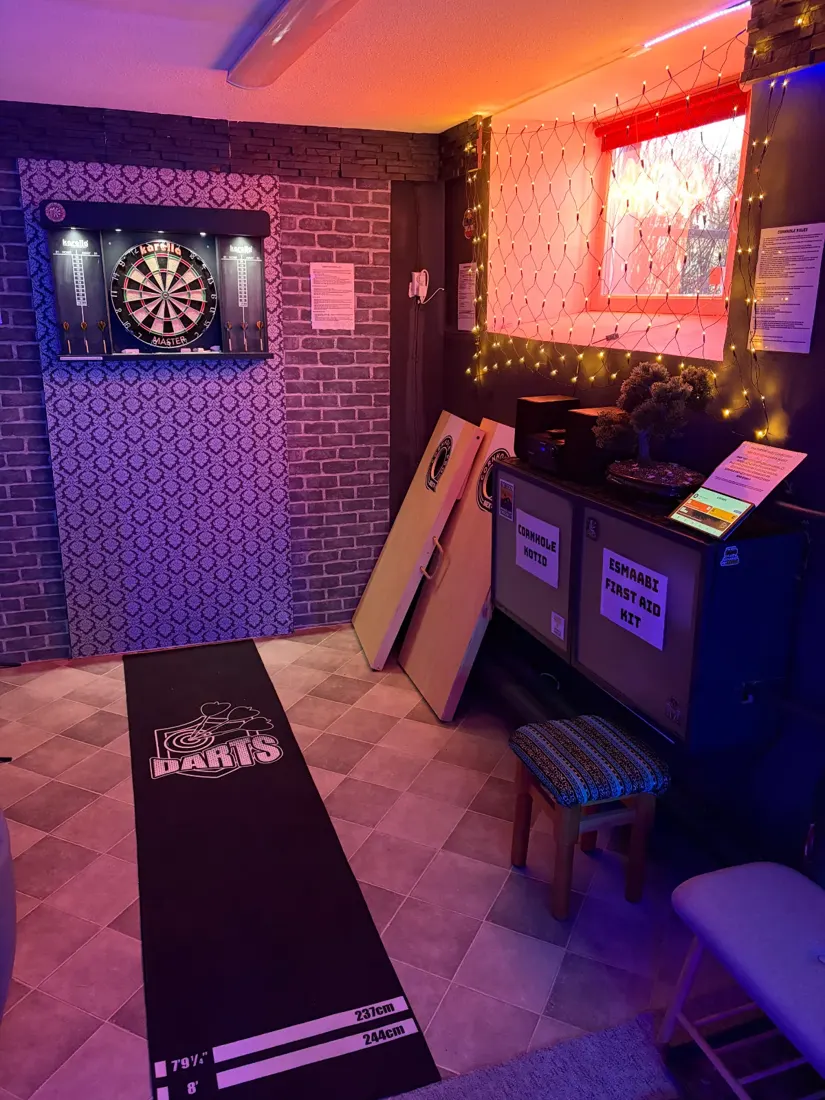
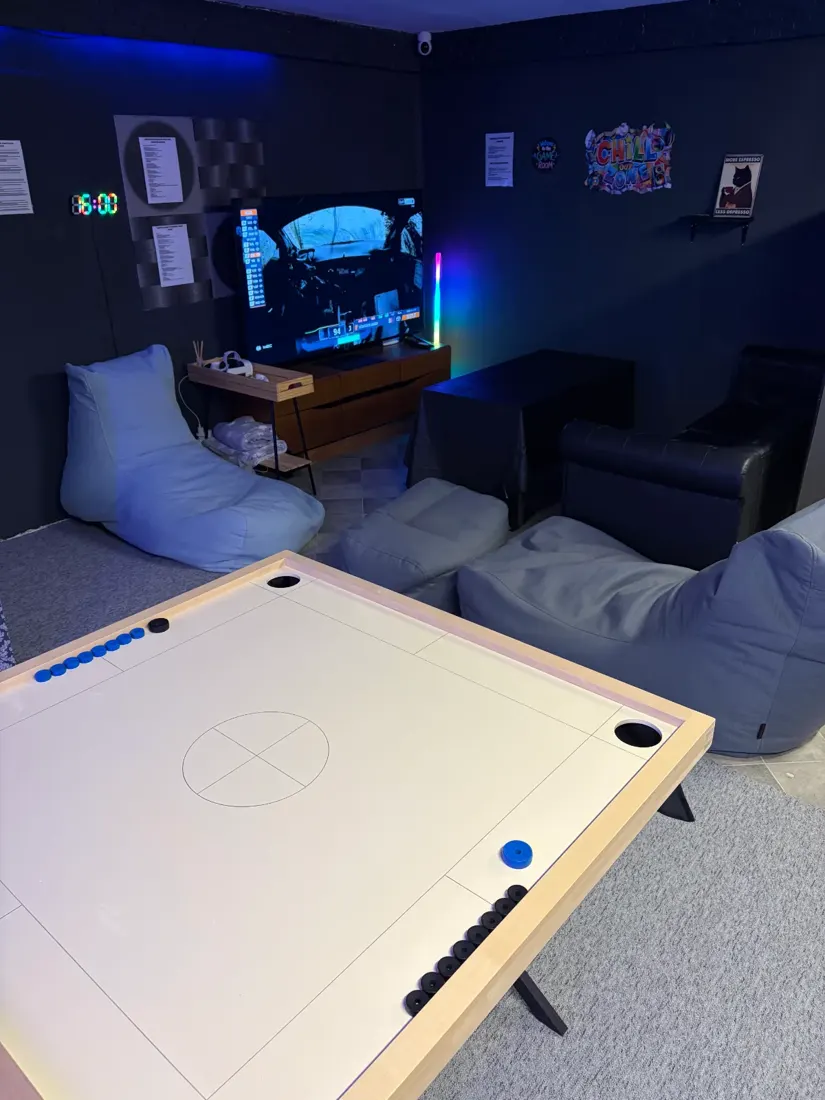
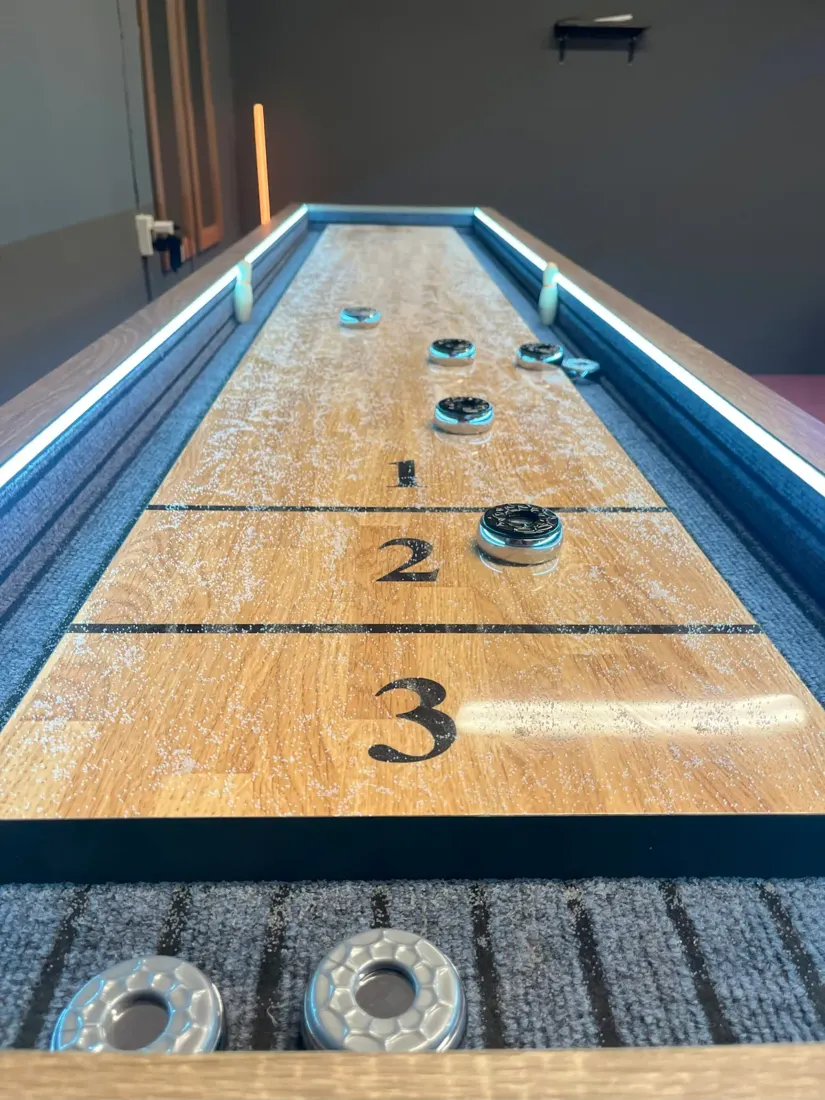
Darts corner Hexagon wall lights Inside the game room Shuffleboard in neon light Sofas and bean bags in front of the TV Table football and air hockey Gaming area with bean bags
Darts
Cornhole
Shuffleboard
Air hockey
Sjoelbak
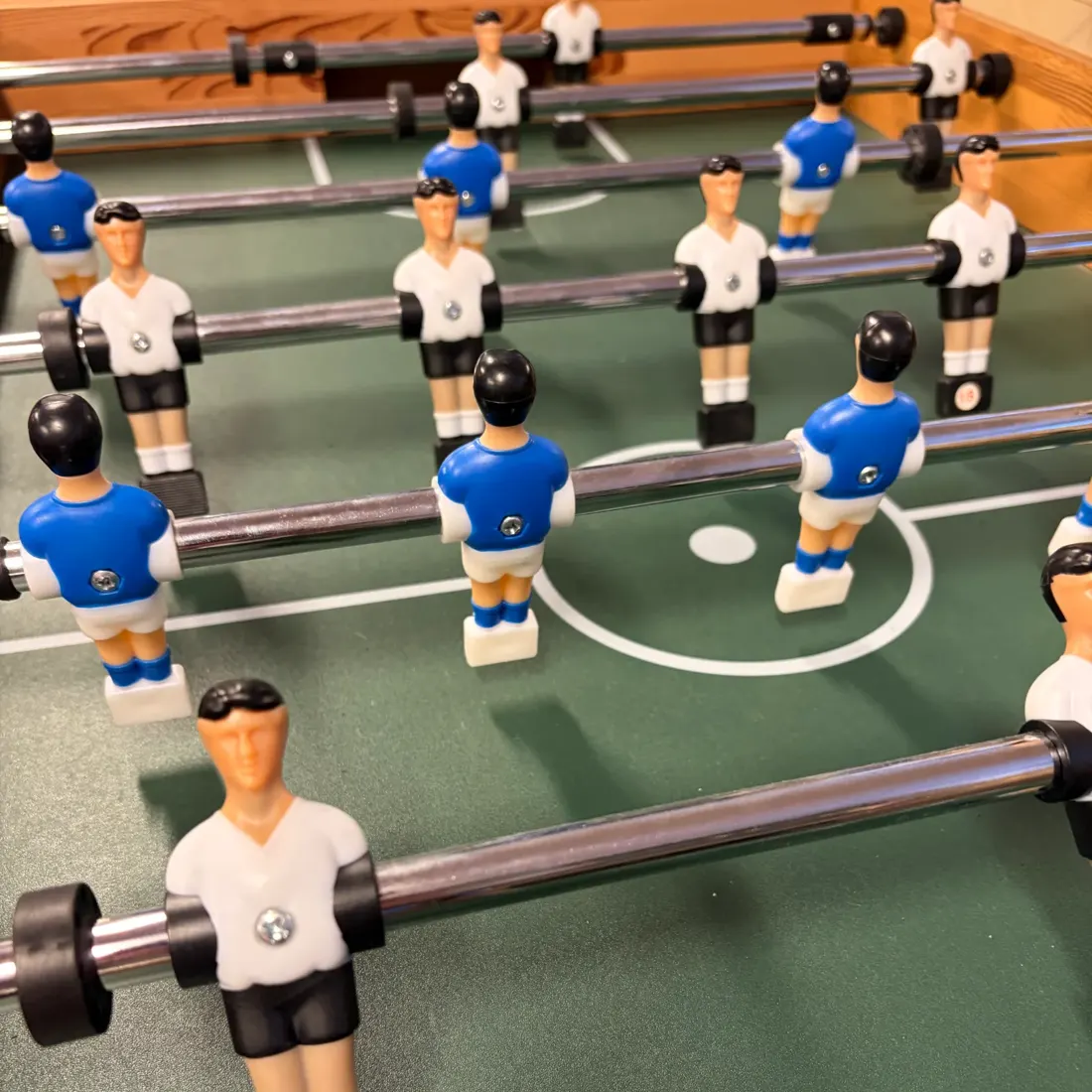
Table football
Koroona
7games in one roomSee all games →

How a visit works

  1. Book and pay

    On Hopitude in a couple of minutes. Need an invoice? Email us.

  2. Get your PIN

    It opens the key box by the door.

  3. Arrive

    If there's no booking before your visit, the code works 15 minutes early.

  4. Return the keys

    If another group is next, leave the room 5 minutes before your time ends.

Prices

One price for the whole room

The hourly rate doesn't depend on group size. Minimum booking is 2 hours.

Because of how our Hopitude booking system works, the standard booking slot is 2 hours. If you'd like the room for, say, 3, 5 or 7 hours, just let us know and we'll set it up!

See free times
Mon–Fri 10–1630 € / hourDaytime rate
Mon–Fri 16–2240 € / hourEvening rate
Sat–Sun 10–2250 € / hourWeekend

Work out the price per person

Whole room120 €
Per person12 €
  • Free cancellation up to 24 hours before the start
  • Book at least 3 hours ahead. For an urgent booking, call us
  • Invoices for companies and private persons
  • Gift cards in any amount
Terms of use of the 4 Sõpra game room

1. General provisions

  1. 1.1. These terms govern the use and rental of the 4 Sõpra game room and are binding on everyone who uses the room.
  2. 1.2. The person renting the room must follow all of the terms below when using the premises.
  3. 1.3. The premises are used according to the schedule agreed in advance, and each renter is responsible for using them for their intended purpose.
  4. 1.4. The game room is managed by Aktio Agentuur OÜ, registry code 14366710.
  5. 1.5. The room is intended for social game nights, birthdays, tournaments and similar activities.
  6. 1.6. A booking can be cancelled free of charge up to 24 hours before it starts. For later cancellations, the full rental fee is payable.
  7. 1.7. Bookings must be made at least 3 hours before the desired start time. If less than 3 hours remain, booking is generally no longer possible (in that case, please contact us by phone).

2. Use and care of the premises

  1. 2.1. The renter uses the premises and equipment with due care, avoiding damage and unreasonable wear.
  2. 2.2. The renter must keep the premises and the property in them in order and make sure the premises are returned to their original condition after the event or activity.
  3. 2.3. Rubbish and other waste must go in the bins provided, and larger waste (including decorations, packaging, etc.) must be taken away by the renter. Deposit bottles and cans go in the box provided.
  4. 2.4. The renter may not bring flammable, hazardous or environmentally harmful substances into the premises.
  5. 2.5. Staying overnight in the room is not allowed.

3. Liability and compensation for damage

  1. 3.1. The renter is fully liable for any damage they cause (including damage to property, theft or vandalism) and must compensate all damage according to the invoice issued by the game room.
  2. 3.2. 4 Sõpra game room is not responsible for the loss, damage or theft of the renter's personal belongings.
  3. 3.3. The renter is responsible for the safety and behaviour of everyone in the room during the event.

4. Cleaning and handing over the premises

  1. 4.1. After use, the renter must tidy the premises and hand them over in the same condition they were in at the start of the rental.
  2. 4.2. If the renter does not clean up, the game room manager has the right to order cleaning at the renter's expense.
  3. 4.3. The premises must be vacated for the next guests 5 minutes before the end of the booked time. The game room doors must be closed and the keys returned to the key box. If the renter exceeds the rental time, the game room manager has the right to charge an additional fee according to the current price list.

5. Other

  1. 5.1. 4 Sõpra game room has the right to refuse to rent the premises to people who have previously broken these terms.
  2. 5.2. If the renter wants to hold an event that involves special services (e.g. catering, music, technical equipment), this must be agreed in writing in advance.
  3. 5.3. Smoking is not allowed on the premises, and alcohol may only be consumed in accordance with applicable law.
  4. 5.4. Follow fire safety rules. In case of fire, call 112 and evacuate. Exits must be kept clear.
  5. 5.5. Personal data provided when booking is processed in accordance with the privacy policy.
  6. 5.6. For questions or problems, please contact us: email – tere@4sopra.ee, phone – 5220054.

Mini tournament with a host

A host explains the rules, shows techniques and runs a tournament, with small prizes for the top three.

~2–2.5 h · 150 € incl. VAT · tere@4sopra.ee

Food from PDN Catering

Order a ready-made package or choose from the menu. Food is delivered for your booking.

Order at least 5 days ahead · tere@4sopra.ee
Events

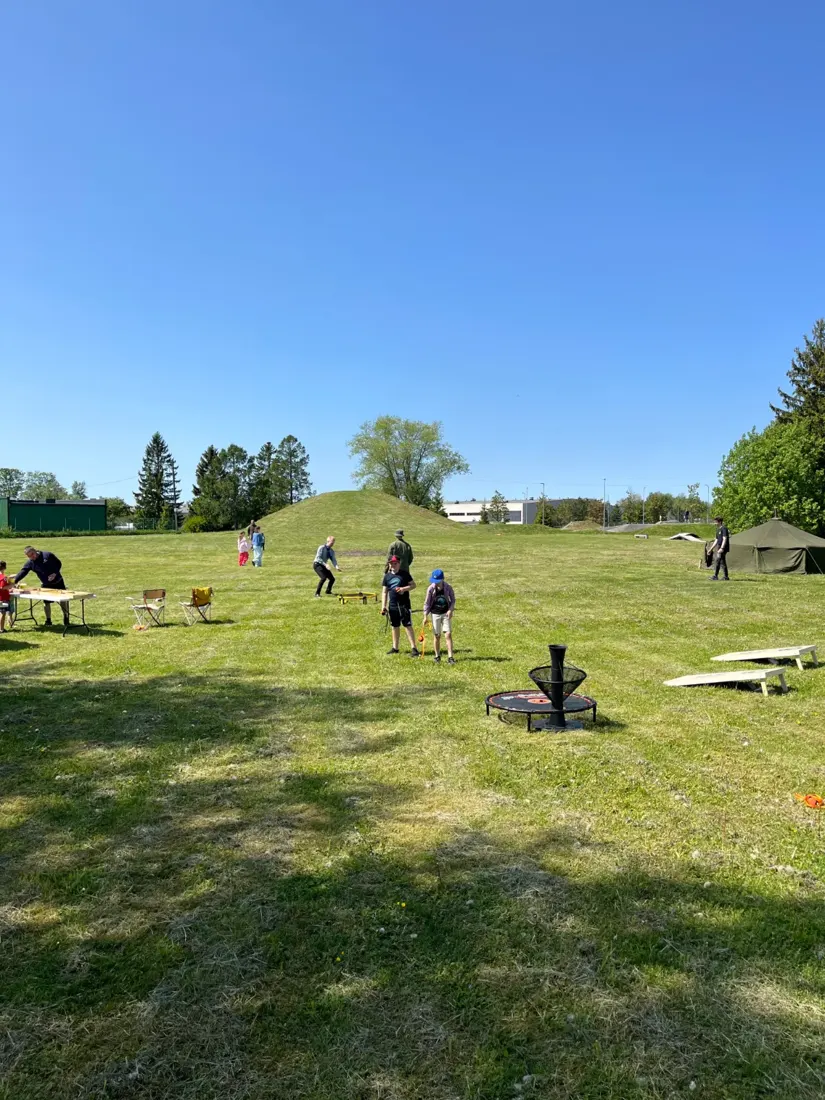
We bring the games to you

Transport, setup, an intro to rules and techniques, and a mini tournament if you'd like one. All you need is a place to play and a good mood.

  • 6–20 players
  • Indoors or outdoors, in a hall or on a lawn
  • Birthdays, company parties, summer days and school events
2 hours175 €
3 hours225 €

Prices within Harju County, VAT included. Elsewhere in Estonia, price by agreement.

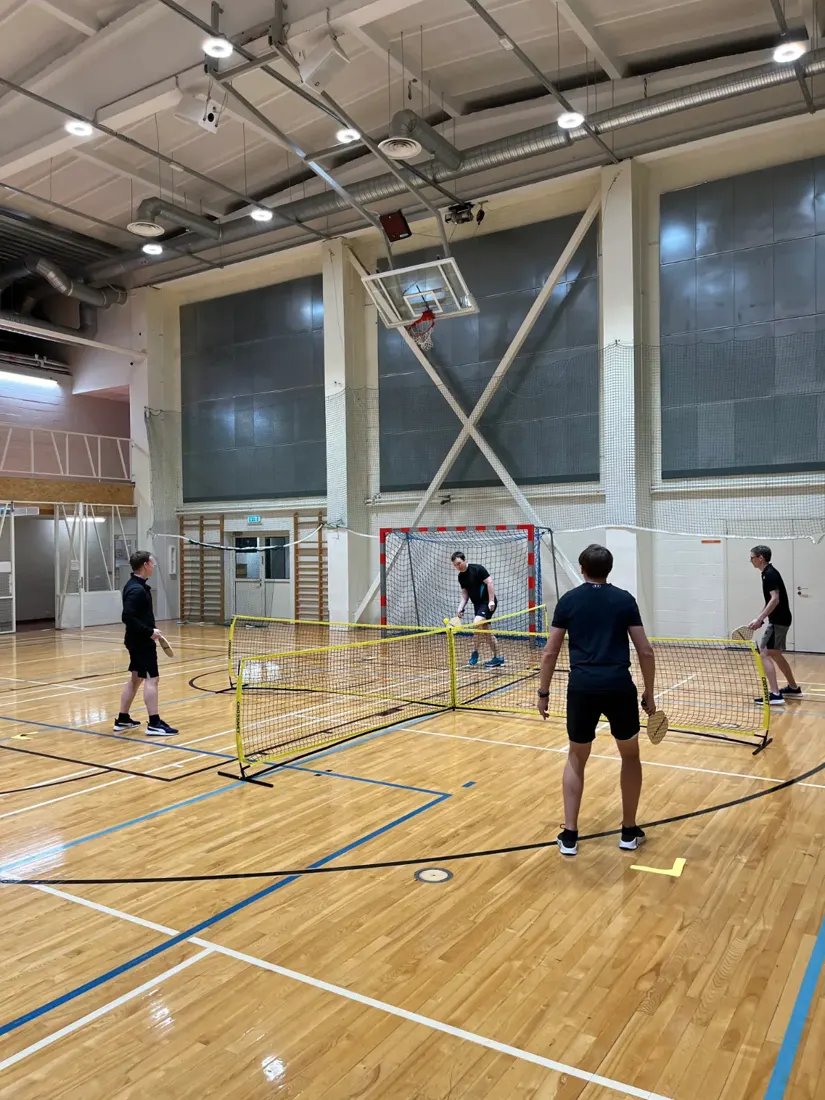
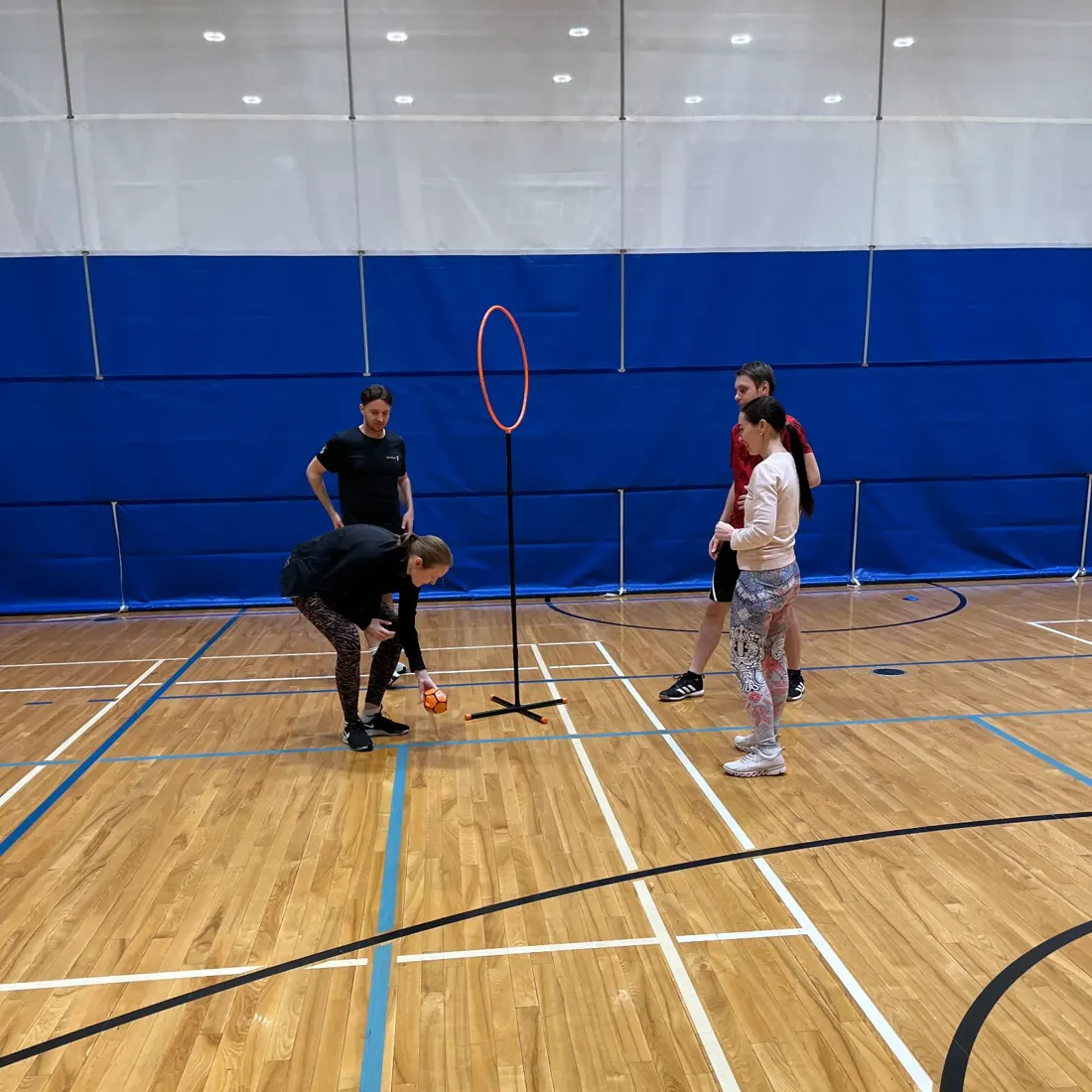
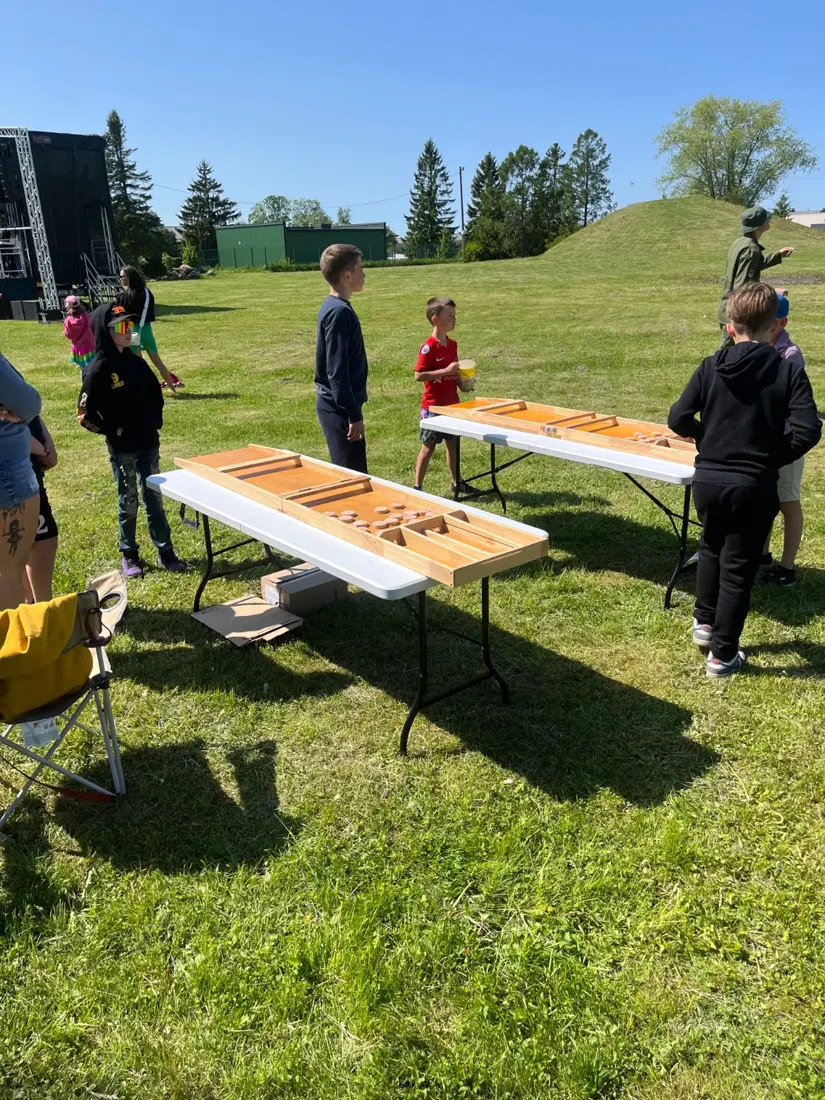
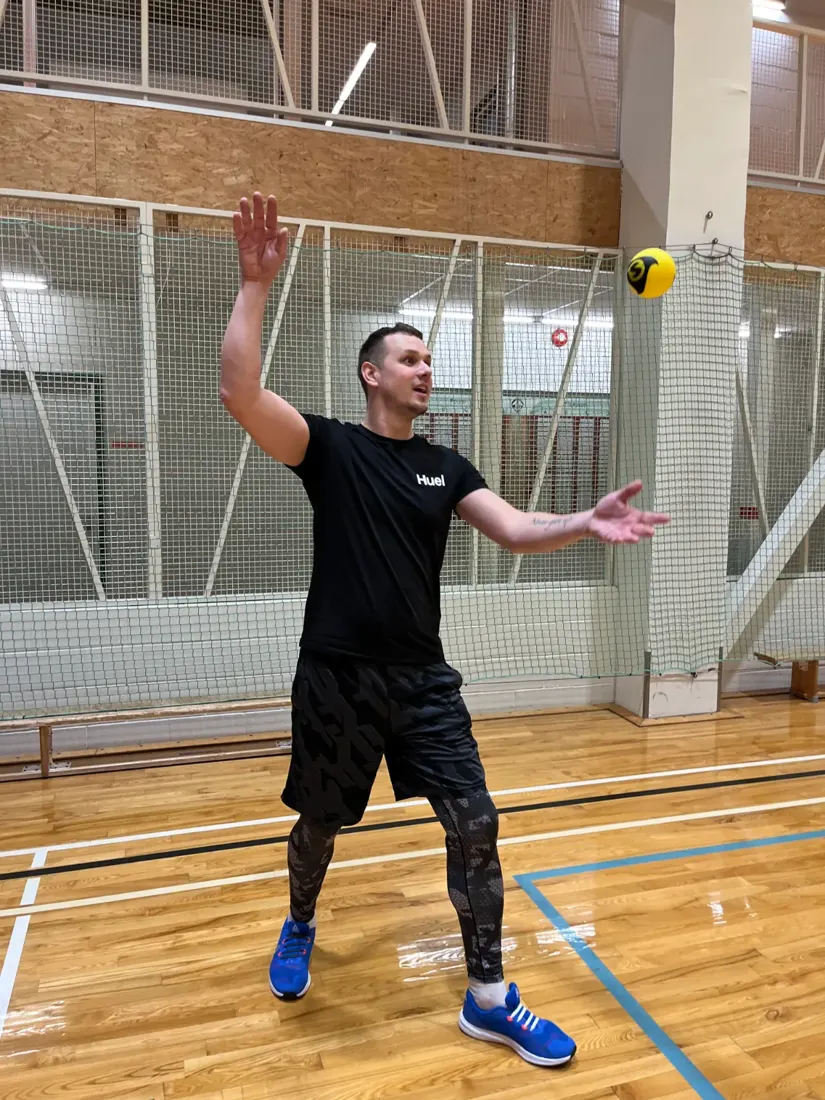
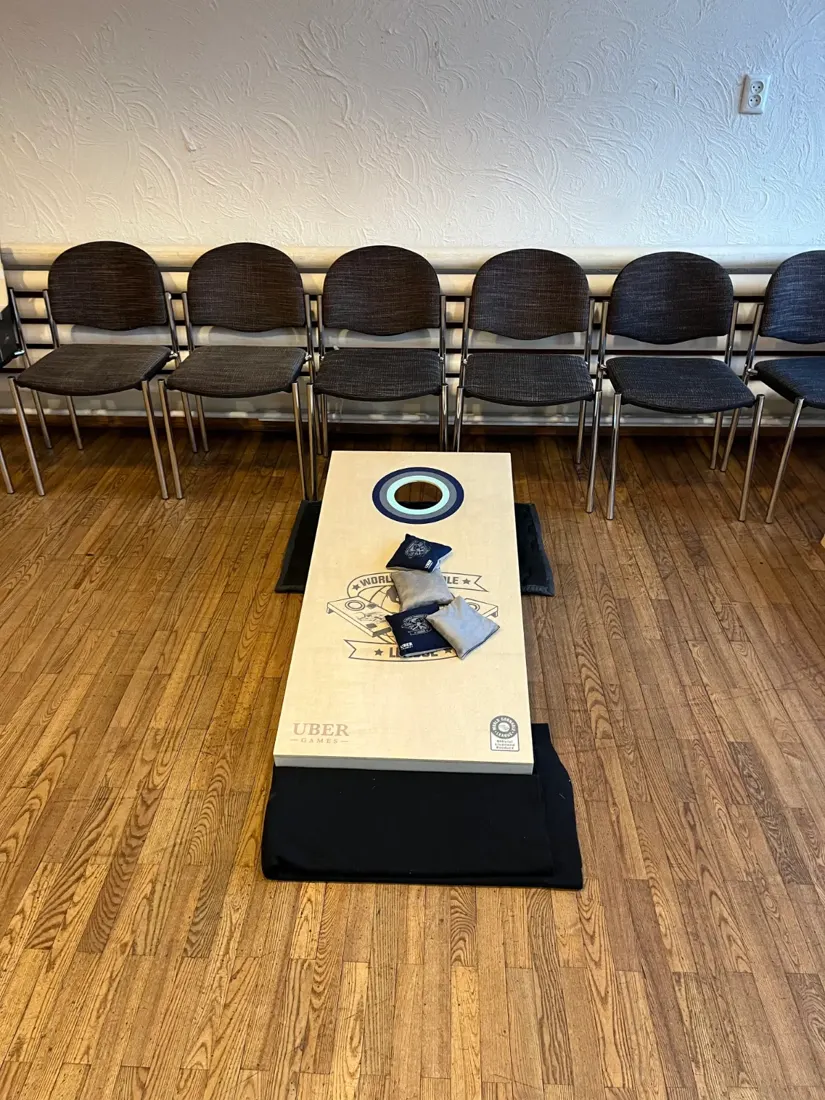
Shuffleboard on a lawn at a summer event Spikeball in a sports hall Cornhole at an event
Games

Choose what you'll play

The game room has everything ready. For events, we bring exactly the games you want.

Darts

Darts

The classic: 501, Cricket or around the clock.

Game roomOutdoorsHall

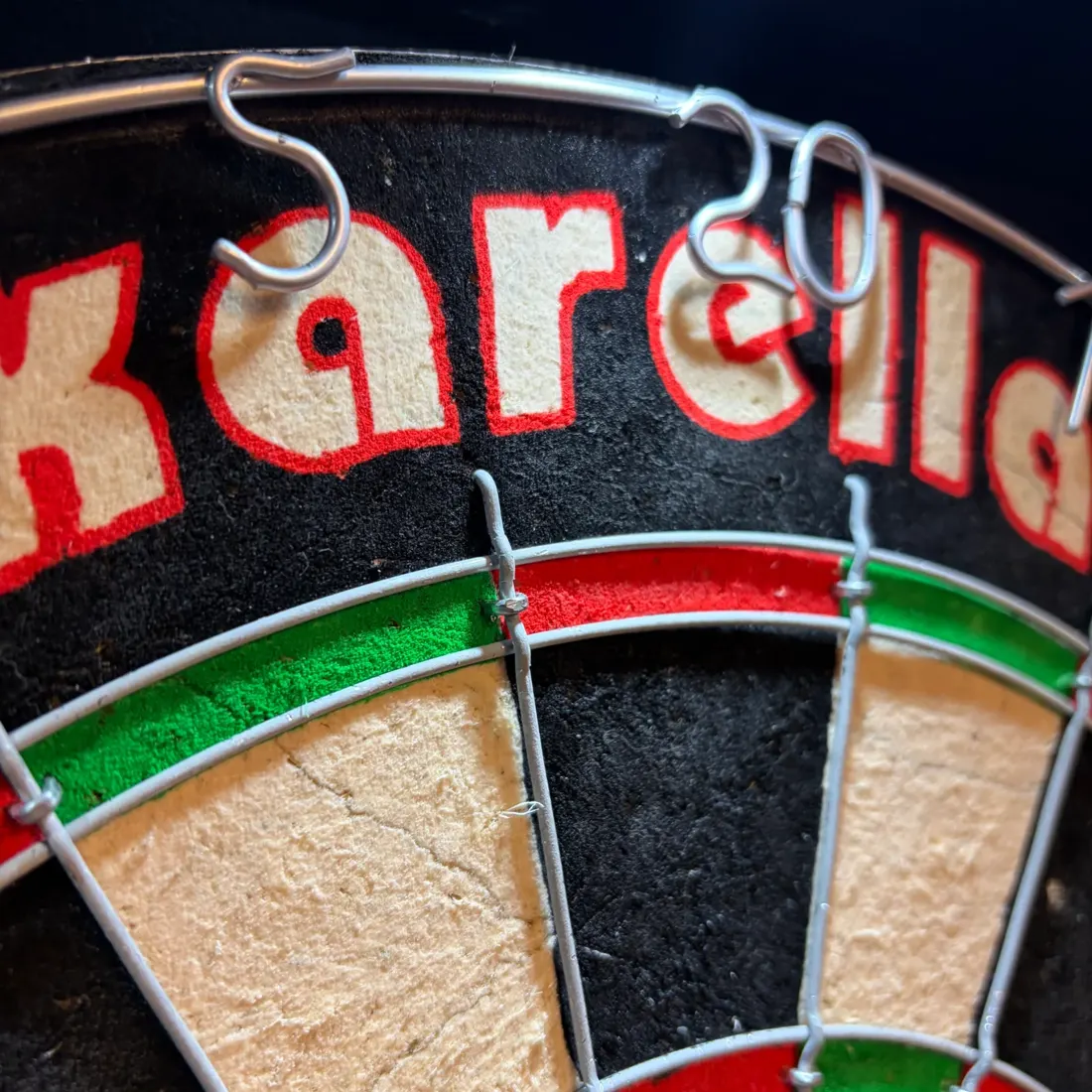
Darts is a classic precision game: you throw darts at a board where different zones score different points. Popular formats such as 301 and 501 add strategy. It takes focus, a steady hand and planning, yet between throws there's plenty of time to chat and cheer. A good pick if you like a calmer pace with a real competitive edge.

Darts rules

  • Darts is played on a round board divided into 20 numbered sectors (1–20), arranged in a non-sequential order.
  • Each sector of the board has several scoring areas:
  • Single: the yellow or black area
  • Double: the outer red or green ring
  • Triple: the inner red or green ring
  • Hit a single area (yellow or black) and you score that sector's number.
  • Hit the outer ring and you score double.
  • Hit the inner ring and you score triple.
  • The bullseye is in the centre of the board:
  • Outer bullseye = 25 points
  • Inner bullseye = 50 points
How to hold and throw a dart
  • Stand firmly and balanced, with your feet steady on the floor.
  • The throw line (oche) is 2.37 metres from the board.
  • Hold the dart in your dominant hand with a comfortable grip: usually the thumb on one side, index and middle finger on the other.
  • Don't throw too hard; keep the movement smooth and straight.
How to play (basic game)
  • The most popular darts games are 501 and 301. The aim is to be the first player to reach exactly zero.
  • Each player starts with 501 or 301 points.
  • Players take turns throwing three darts per round.
  • The points scored in a round are subtracted from the player's current score.
  • The game continues until one player reaches exactly zero.
  • If a player's score would go below zero, their turn ends and the score returns to what it was at the start of the round.
Winning the game
  • There are two main ways to finish:
  • Double Out: the player must reach zero with a double.
  • Example: with 18 points left, you must hit double 9.
  • Straight Out: the player may reach zero with any combination.
  • Example: with 18 points left, you can hit single 18, or 9 twice, and so on.
Air hockey

Air hockey

A fast, noisy duel for two.

Game room

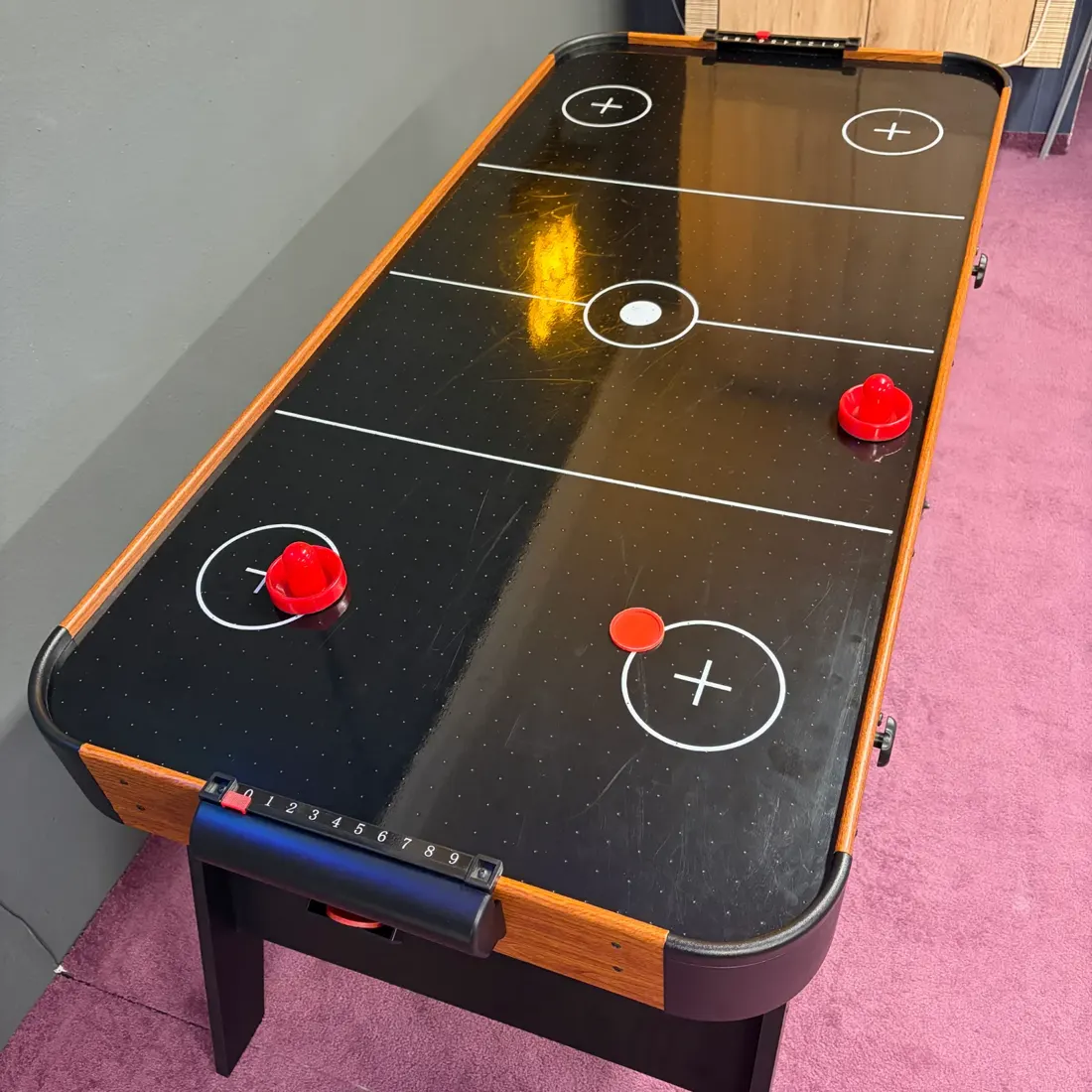
Air hockey is a fast reaction game for two: the puck glides over a cushion of air, and you try to score in your rival's goal while guarding your own. Games are short and intense, so you'll want a rematch straight away. One of the most popular games at 4 Sõpra, for kids and adults alike.

Air hockey rules

  • Air hockey is usually played by two players.
  • The aim is to hit the puck into your opponent's goal and defend your own.
  • The game starts when the puck is placed in the middle of the table and one player takes the first shot.
  • Players may only hit the puck with the mallet on their own half of the table.
  • Touching the puck with your hand is not allowed.
  • A goal counts when the puck goes fully into the goal.
  • After a goal, the player who conceded puts the puck back into play.
  • Games are usually played to a set score (e.g. 7 or 10 points) or for a set time.
  • The first player to reach the agreed score wins.
Shuffleboard

Shuffleboard

Slide pucks into the scoring zone and knock out your rival's.

Game room

In shuffleboard you slide pucks down a long table towards the scoring zones, aiming to land in the highest zone while knocking your rival's pucks out of good spots. It takes a fine feel for speed and some planning, and every round can turn the score around. A firm favourite with friends and colleagues.

Shuffleboard rules

Aim of the game
  • Slide your pucks as far along the table as possible without them falling off, and outscore your opponent. The game takes accuracy and strategy.
Players
  • Played with 2 or 4 players (one against one, or in teams).
  • Each player or team has 4 pucks (in two different colours).
How to play
  • Players take turns sliding one puck at a time from one end of the table to the other.
  • Once all pucks have been played from one end, players move to the other end and start sliding again in turn. This repeats until there is a winner.
  • The player or team with the higher score before a round starts the round. If the score is tied, players take turns to start.
  • When playing in teams, team members can agree among themselves who slides how many pucks and in what order.
  • The goal is to get your puck as far as possible without it falling off the table.
  • You may knock your opponent's pucks away or nudge your own into a better position.
Scoring
  • After each round, points go to one player or team only: whoever has the puck furthest along.
  • Points:
    • 1 point – puck in the zone closest to the throwing end
    • 2 points – middle zone
    • 3 points – far zone
    • 4 points – puck hanging over the edge without falling
  • If a puck touches a line, it scores the lower zone. For example, a puck in zone 3 touching the line between zones 3 and 2 scores 2.
End of the game
  • Play to a set score (e.g. 15 or 21) or a set number of rounds.
  • The player or team with the most points at the end wins.
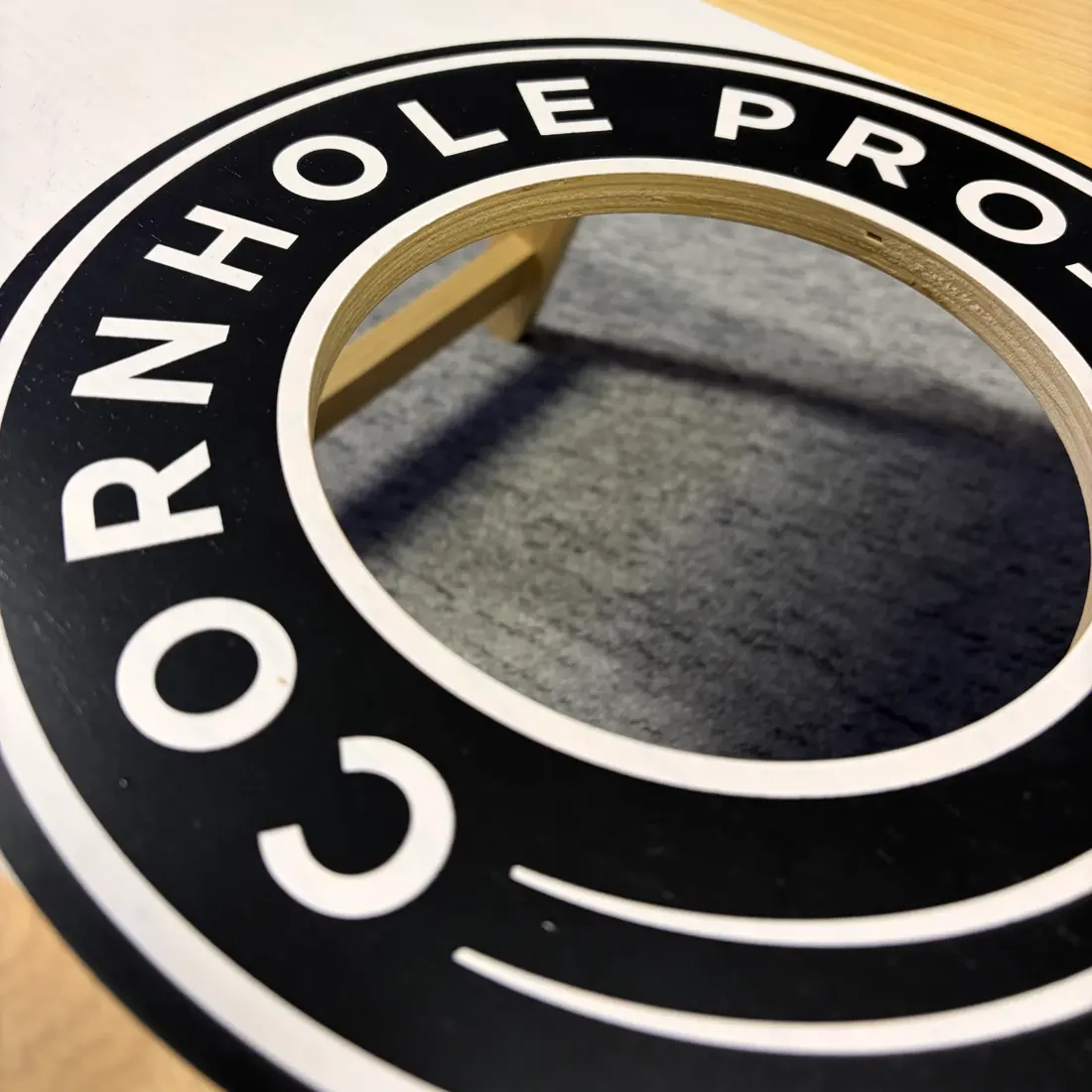
Cornhole

Cornhole

Toss bags into the board's hole. Easy to start, hard to stop.

Game roomOutdoorsHall

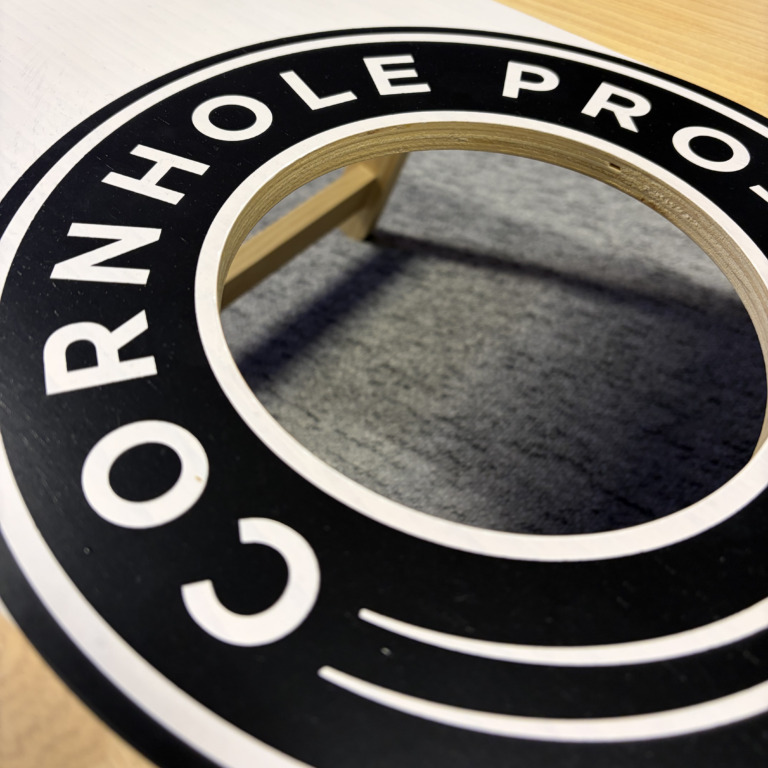
Cornhole is a simple, addictive throwing game: toss bean bags at a sloped board with a hole. A bag on the board scores, a bag in the hole scores more. Usually played two or four at a time, it suits every age because the rules take a minute to learn, and it gets exciting when the score is close. Great for birthdays and company events.

Cornhole rules

  • The game is usually played by two teams of two, but it can also be played one against one. In a four-player game, teammates stand opposite each other at the two cornhole boards.
  • Each team has 4 bags of the same colour. All 8 bags are thrown from the same end at the start of each round.
  • A coin toss decides which team starts and from which end the bags are thrown.
  • The team that won the previous round throws first in the next round.
  • A player throws a bag towards the board opposite.
  • Players may throw from anywhere behind the front edge of the board. Stepping over the line is not allowed.
  • Opponents take turns throwing until all 8 bags have been thrown.
  • If a bag touches the ground first and then lands on the board, it must be removed and does not count.
  • If a bag touches the board and the ground at the same time but ends up resting on the board without touching the ground, it counts.
  • Bag in the hole = 3 points.
  • Bag on the board = 1 point.
  • Scoring uses the cancellation format.
Example
  • Team A gets 1 bag in the hole (3 pts) and 2 on the board (2 pts) → 5 points in total.
  • Team B gets 2 bags on the board (2 pts).
  • Team A scores 3 points for the round (5 − 2 = 3) and throws first in the next round.
  • The leading team throws first in the next round.
  • The game continues until one team reaches at least 21 points.
Cornhole fouls
  • A fouled bag is removed from play.
  • If the fouled bag moved another bag (e.g. knocked it into the hole), that bag is put back where it was.
A foul happens when:
  • A player steps over the foul line (the front edge of the board).
  • A bag touches the ground before landing on the board.
  • A player throws out of turn.
Scoring
  • Points are counted only after all 8 bags of the round have been thrown.
  • 3 points – bag goes into the hole
  • 1 point – bag stays on the board
  • 1 point – bag hangs partly into the hole
  • 1 point – bag hangs over the edge without touching the ground
  • 0 points – bag lands on the ground
Cancellation scoring and throwing order
  • At the end of each round, the lower-scoring team's points are subtracted from the higher-scoring team's points.
  • The difference is added to the leading team's total score.
  • The team with the higher round score throws first in the next round.
  • If both teams score the same, the total doesn't change.
  • In that case the winner of the previous round keeps the throwing order.
Goal
  • Be the first team to reach 21 points and win the game.
Note
  • For a shorter game you can use total scoring, where all points are added up every round without cancellation.
Koroona

Koroona

An Estonian classic: flick discs into the corner pockets.

Game roomOutdoorsHall

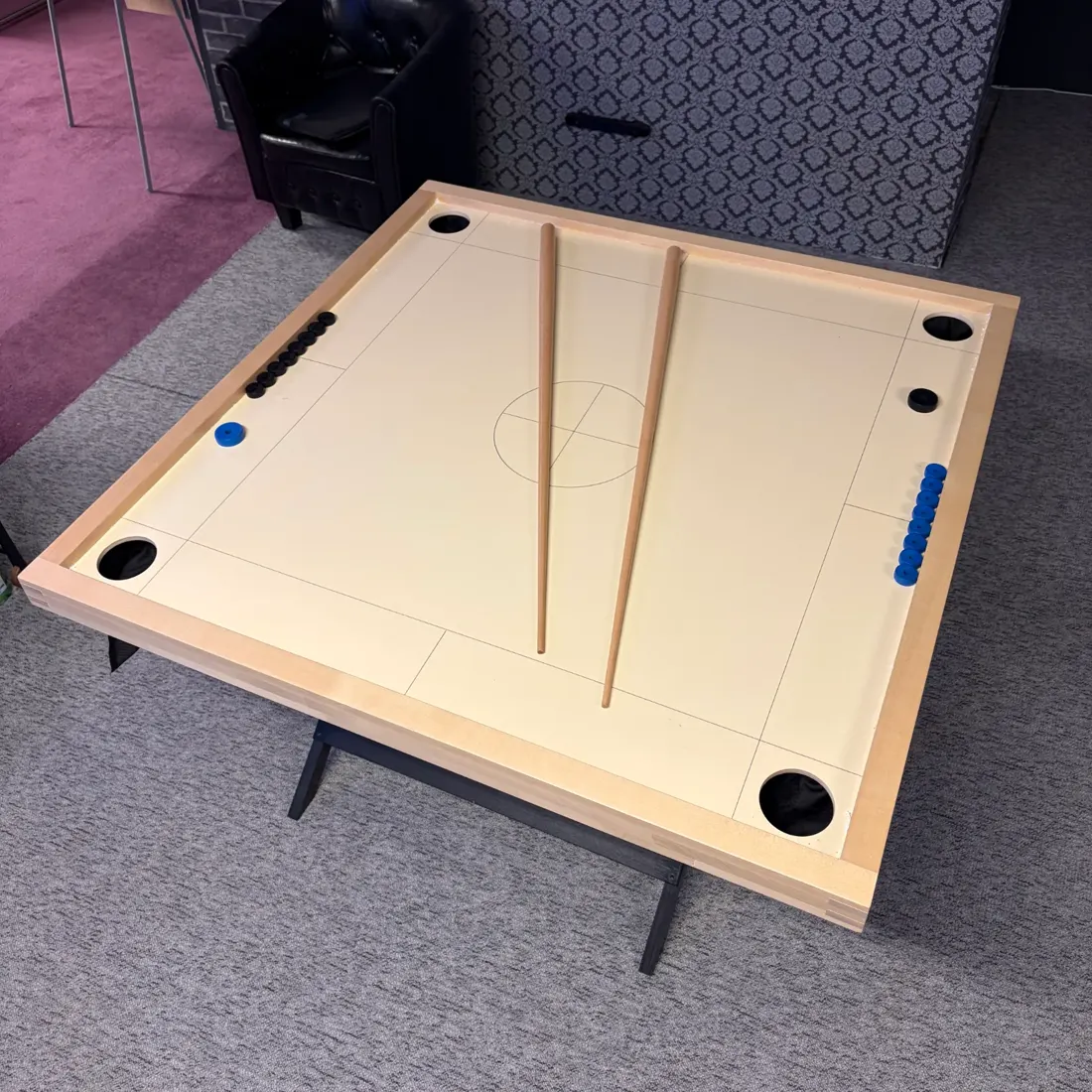
Koroona is a table game well known in Estonia, often compared to billiards. Using a small striker disc, players flick discs into the pockets in the corners, aiming to sink all their own colour before the opponent. It combines accuracy, tactics and patience, and brings back a pleasant dose of nostalgia for those who played it as kids.

Koroona rules

Aim of the game
  • The winner is the first player to legally pocket all of their discs.
Setting up
  • The discs are placed flat and close together against the edge of the board, four on each side of the centre line.
  • Players agree before the game who takes the opening shot.
Taking a shot
  • The striker disc must be placed in the shooting area, between the front and side edge of the player's own edge zone, so that the line of the shooting zone cannot be seen through the striker's hole.
  • Shots are taken with the thin end of the cue. Hitting with the thick end or the side of the cue is not allowed.
  • A shot counts as taken the moment the cue touches the striker.
  • If a player pockets one or more of their own discs, they get another shot.
  • You may aim the discs at any pocket on the board.
  • If a disc flies off the board, it is placed:
  • first, in the middle of the centre circle
  • if that spot is taken, on the diameter line (parallel to the board edges) on the side it came from, against the inner edge of the centre circle
Direct shots and rebound shots
  • In a direct shot, the striker must first touch one of the player's unblocked discs (not in a forbidden zone) and may then touch any disc.
  • Direct shots may not be taken at discs that are:
  • in the centre circle
  • in the player's own edge zone (these are blocked discs)
  • Rebound shots are allowed and must first touch at least one edge of the board or one of the player's own discs.
  • If a player hits their own blocked disc with a direct shot, the disc is put back and a penalty applies.
  • If only blocked discs are left and the rebound shot doesn't touch the player's disc, there is no penalty.
  • If a player hits the opponent's blocked disc with a direct shot, the disc stays in its new position, but the shooter is penalised.
  • It is not allowed to knock the opponent's discs directly into blocked zones (the centre circle or the opponent's edge zone). In that case the opponent's disc is put back and a penalty applies.
Penalties and the penalty disc
  • A penalty disc is placed on the board and the player loses their next shot when:
  • a legal direct shot doesn't touch any of the player's unblocked discs
  • the striker first touches an opponent's disc, or an opponent's and own disc at the same time
  • after rebounding from the far edge, the striker first touches an opponent's disc although an own disc was available
  • the striker itself goes into a pocket
  • the striker flies off the board or stays resting on the edge
  • all of the player's discs are blocked and, after a rebound, the striker touches no disc or only forbidden targets
  • a direct shot knocks an opponent's disc off the board
Additional notes
  • No penalty is given when:
  • a rebound shot doesn't touch any disc
  • after a correct rebound, the striker hits the player's own blocked disc
  • the striker is hit twice (the cue touches it twice)
  • the striker touches a disc in the edge zone before a permitted disc
  • The penalty disc is placed in the middle of the opponent's edge zone, against the edge. If that spot is taken, it is placed as close to the centre line as possible without moving other discs.
  • If a player already has all 8 discs in play, the penalty disc is owed.
  • When the opponent pockets one of their discs, the owed penalty disc is placed on the board straight away.
  • If a player pockets all 8 discs in one turn, the owed penalty discs are placed immediately and the player may continue.
Losing the turn
  • A player loses the right to continue when:
  • a legal shot doesn't pocket any of their own discs
  • a shot pockets an opponent's disc together with their own
  • any disc (their own or the opponent's) flies off the board or stays resting on the edge
  • after the shot, the striker bounces back into the player's edge zone so that its hole no longer shows the edge-zone line, and the player has no blocked discs left.
Sjoelbak

Sjoelbak

A Dutch precision game with wooden discs.

Game roomOutdoorsHall

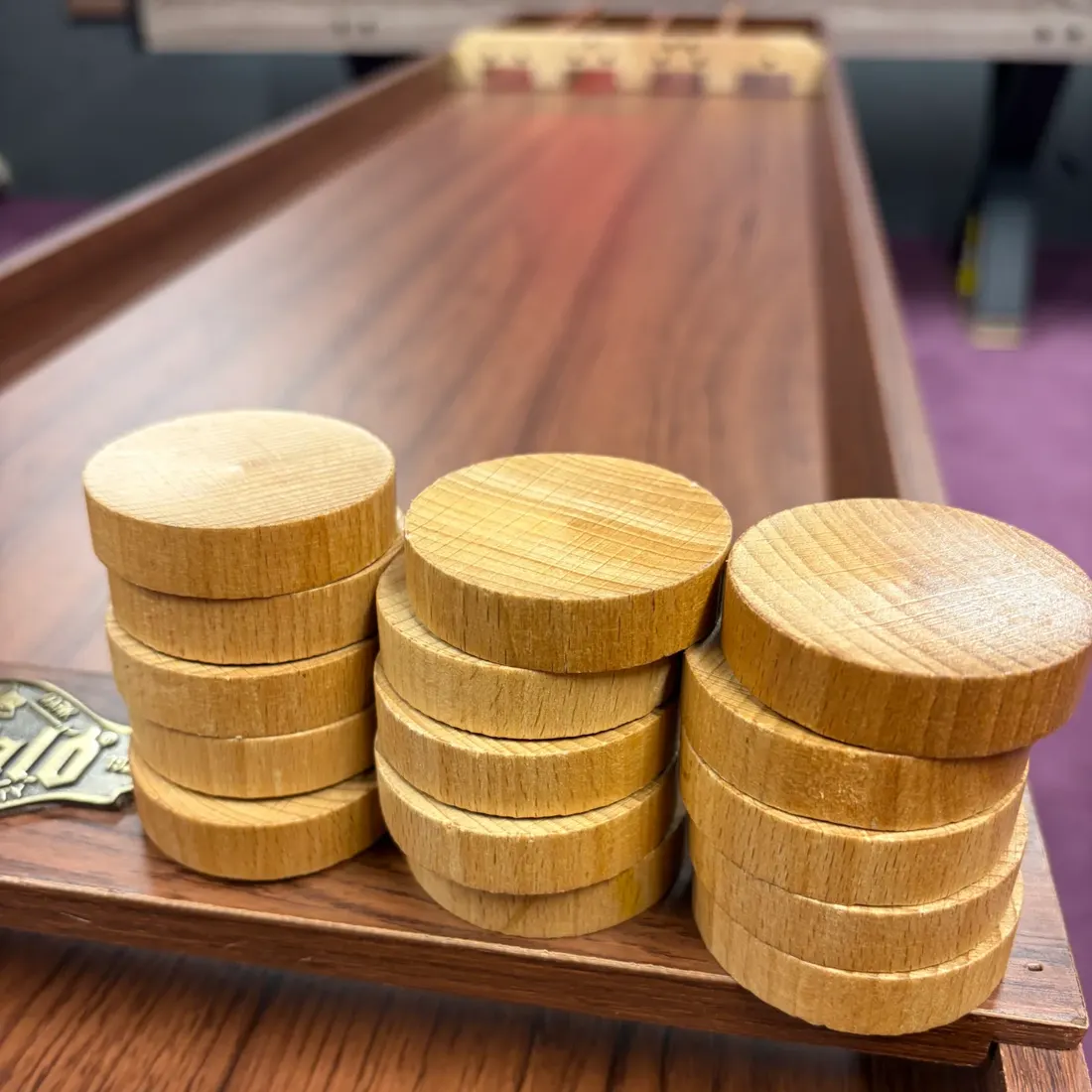
Sjoelbak is a traditional Dutch table game: you slide wooden discs along the board into four gates, each worth different points, and add up the score at the end of the round. It looks simple but needs a good feel for touch and angle. Suits all ages and is easy to play while chatting.

Sjoelbak rules

  • Start bar: about 43 cm from the front edge of the board there is a horizontal wooden bar that the discs must pass under. This is called the start bar.
  • In league and competition play, stacking discs against the start bar is not allowed, but it's often done in friendly games.
  • Gate bar: about 39 cm from the back edge there is an upright wooden gate bar with 4 evenly spaced arched openings.
  • The openings are marked from left to right: 2, 3, 4, 1.
  • Each opening is 6 cm wide.
  • Collection areas: behind the gate, the board is divided lengthwise into four sections that collect the discs from each opening in separate compartments.
Aim of the game

The aim is to slide the discs through the openings in the gate bar and score as many points as possible.

How the game goes
  • In one turn, each player gets 3 attempts (sub-turns) to play all 30 discs.
  • Try to spread the discs as evenly as possible across all four compartments, because one disc in each compartment doubles the score.
A turn, step by step
  • First sub-turn:
    • The player slides all 30 discs.
    • Discs that reach the compartments stay there, but are gathered into stacks in the back corner so they don't block the openings.
    • Stacking:
      • First stack: 4 discs pushed into the back corner of the compartment.
      • Next stacks: 3 discs, placed diagonally against the previous stack.
    • If all discs reached the compartments, the player's turn ends.
    • Remaining discs (that didn't reach a compartment) are brought back and the player goes on to the second sub-turn.
  • Second sub-turn:
    • The same process repeats with the remaining discs.
    • Discs that reach the compartments are stacked again.
  • Third sub-turn:
    • The player's last chance to get discs into the compartments.
    • At the end of this sub-turn the points are counted.
Deciding where a disc is
  • A disc counts as in a compartment when the whole disc has passed the front edge of the gate bar.
  • In case of dispute, a straight edge is used: if the disc moves when the straight edge is pushed against the gate, it does not count as in the compartment.
Special cases

If a disc:

  • Enters a compartment without passing through the correct arch
  • Leaves the board surface
  • Leaves a compartment other than through its arch
  • Slides back under the start bar

➡️ In these cases the disc is out of play until the end of that sub-turn, but it can be used again in the next sub-turn.

Scoring

How points are counted

  • The compartments are worth 1, 2, 3 and 4 points.
  • A set (4 discs, one in each compartment) = 20 points (1 + 2 + 3 + 4 = 10, doubled).
  • Remaining discs that don't complete a set score the value of their compartment.
Scoring example
  • Compartment 1: 5 discs
  • Compartment 2: 9 discs
  • Compartment 3: 5 discs
  • Compartment 4: 7 discs
Calculation:
  • Sets:
    • Lowest compartment count: 5 → 5 sets × 20 points = 100 points
  • Remaining discs:
    • Compartment 2: 4 discs → 4 × 2 = 8 points
    • Compartment 4: 2 discs → 2 × 4 = 8 points

Total: 100 + 8 + 8 = 116 points

Highest possible score
  • Maximum in one turn: 148 points
    • Calculation: (20 points × 7 sets) + (2 discs in the 4-point compartment) = 148 points
Competitions
  • Competitions usually consist of 5, 10 or 20 games.
  • The points from all games are added up and the player with the highest total wins.
Table football

Table football

Quick wrists and a competitive streak.

Game room

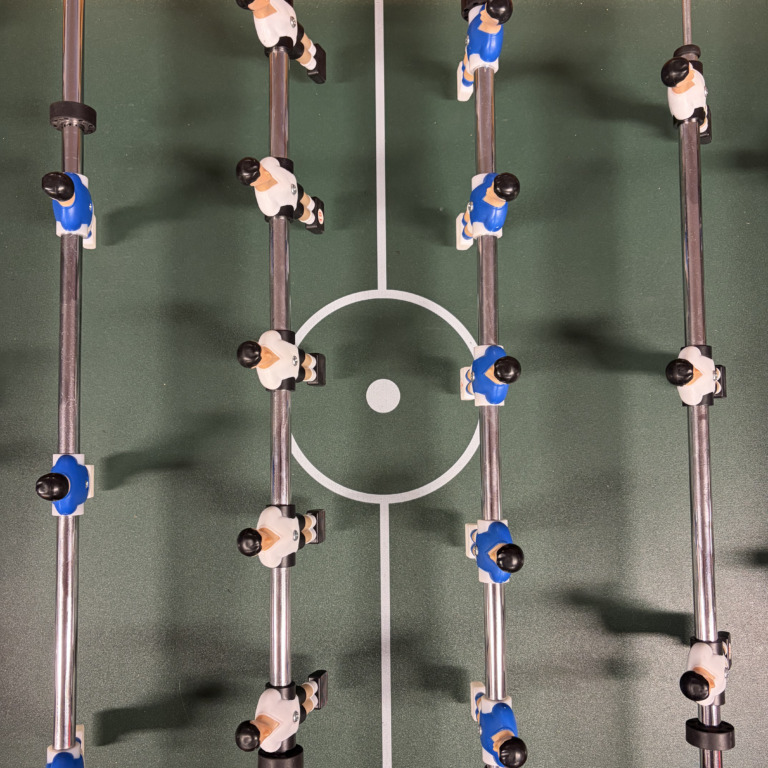
Table football brings classic football to a small table: you move the players with rods and try to score in the opposing goal. It's fast and often very emotional; quick reactions and teamwork with your partner give the edge, though one-on-one works too. Perfect for tournaments and a firm favourite at 4 Sõpra.

Table football rules

  • Table football is usually played by two players or two teams of two.
  • The aim is to score in the opponent's goal.
  • The game starts with the ball put into play in the middle of the table.
  • The ball may only be hit with the players attached to the rods.
  • Spinning the rods uncontrollably in full circles is not allowed.
  • A goal counts when the ball goes fully into the goal.
  • After a goal, the ball is put back into play in the middle, or as agreed with the team that scored.
  • Games are usually played to a set number of goals (e.g. 5 or 10).
  • The first player or team to reach the agreed number of goals wins.
Spikeball

Spikeball

Two against two around a small net.

OutdoorsHall

Spikeball, also called roundnet, is a fast ball game played around a round net, usually two against two. You hit the ball down onto the net so it bounces up, and the other team must return it before it touches the ground, with up to three touches per team. Short, lively rallies keep the energy high.

Spikeball rules

Spikeball is a team game played by two teams of two. Opponents stand across from each other with the Spikeball net in the middle. The game starts with a serve: the server hits the ball onto the net towards the opponent. After the serve, players may move freely but must not get in each other's way. The aim is to hit the ball onto the net so the other team can't return it. Each team has up to three touches to return the ball. A rally lasts until the ball isn't returned correctly.

Setting up
  • Starting: the winner of rock-paper-scissors chooses a side or the serve.
  • Positions: opponents stand across from each other.
  • Before the serve: all players (except the receiver) must be at least 6 feet (about 1.8 m) from the net. The receiver may stand wherever they like.
  • After the serve: players may move freely.
  • Possession: changes when the ball touches the net.
  • Touches: up to 3 per team (you don't have to use them all).
  • Switching sides: when one team reaches 11 points, the teams switch sides.
Scoring
  • Rally scoring is used: both the serving and the receiving team can score.
  • Games are played to 21 points, and you must win by at least 2.
  • Teams switch sides when one team reaches 11 points.
A team scores a point when, during the other team's possession:
  • The ball isn't returned onto the net within 3 touches.
  • The ball touches the ground.
  • The ball hits the rim (including the legs) – this also applies on the serve.
  • The ball doesn't bounce off the net in a single bounce.
  • There is an illegal serve or other violation.
Serving
  • Positions: the receiver and server stand opposite each other. Only the designated receiver may return the serve.
  • The serve: toss the ball up before hitting it. You can't serve straight out of your hand. If you don't like the toss, you may catch the ball and try once more.
  • Foot rule: when serving, the server's feet must be at least 1.8 m from the net. You may lean over the serving line, but your feet may not cross it before you hit the ball.
  • Movement: you may take a pivot or approach step during the serve, but not move sideways.
  • Power: serves can be hard or soft; soft drop serves are allowed.
  • Height: the serve must be lower than the receiver's raised hand. If the ball is too high, the receiver must call "let" before their teammate touches the ball. The server then gets 1 new serve. If that one is also faulty, the receiving team gets the point and the serve.
  • Irregular bounces: if the ball bounces unpredictably on the net (the serve was too close to the rim), the receiver must call "let" before their teammate touches the ball, and again the server gets 1 new serve. If that one is faulty, the receiving team gets the point and the serve.
  • After winning a point, the server swaps places with their teammate to serve to the other member of the receiving team next.
  • All four players serve in the same order throughout the game, and the server changes every time the receiving team wins a point.
Playing the ball
  • Order of touches: touches must alternate between teammates.
  • Body parts: the ball may touch any part of the body, but the same player may not touch it twice in a row.
  • Not allowed:
  • Holding, lifting or throwing the ball.
  • Hitting with two hands (hands together count as two hands).
  • Hitting the net: the ball must bounce off the net once and clearly clear the rim.
  • Rim touches: if the teams can't agree whether the ball touched the rim, the serve is replayed.
Violations
  • Hindering: a defender must keep out of the attacking team's way. If hindered, the attacker may call "hinder" and the point is replayed.
  • Hitting an opponent with the ball: if a defender is hit by the ball, the attacker calls "hinder" and the point is replayed.
  • Playing out of turn: if a player plays the ball when it's not their team's turn, their team loses the point.
  • Ball rebounding to yourself: if the ball bounces off the net back at the player or their teammate, the point is lost.
  • Moving the net: if a player moves the net on the ground or affects the ball's path, their team loses the point.
Crossnet Pickleball

Crossnet Pickleball

Four players at once, each in their own square.

OutdoorsHall

Crossnet Pickleball mixes volleyball and pickleball: the court is split into four squares and each player defends their own. You hit the ball over the net into another player's square and try to keep the rally going until someone slips. Everyone plays at once, and beginners pick up the rhythm quickly while experienced players still find a challenge.

Crossnet Pickleball rules

  • Number of players: CROSSNET Pickleball is played with at least four players, each in one of the four squares.
  • Goal: move up from a lower square to a higher one, eventually reaching square four, score points and win the game.
Court layout:
  • Squares: the court is divided into four equal squares, numbered 1 to 4 clockwise.
  • The net: it stands in the centre, separating all four squares from each other.
Starting the game:
  • Positions: each player stands in their own square. Starting positions can be drawn by lot or agreed.
  • Serving: the game starts with a serve from the player in square four, who hits the ball diagonally into square two. Serves must be underhand and taken from behind the square-four line (out of bounds). You may not serve into square one or three. If the ball touches the net on the serve and lands in square two, the serve is retaken.
Game play:
  • Hitting the ball: after the serve, players must hit the ball over the net, or around it from the outside, into any other square with a single hit. The ball may not be volleyed; it must bounce once before you hit it.
  • Number of touches: each player may hit the ball only once before it must land in another player's square.
  • Moving on court: players may move freely within their own square or out of bounds, but must not hinder the other players.
  • Faults: a player must move back to square one if the ball lands in their square and they can't return it correctly, or if they hit the ball into the net or out of bounds. With more than 4 players, the player who made the fault leaves the court and a new player takes their place in square one.
Scoring and rotation:
  • Scoring points: only the player in square four can score. Every time someone makes a fault, the square-four player scores one point.
  • Rotation: when a player is eliminated, they leave the court and the remaining players move clockwise into the next square. A new player enters square one. With 4 players, the player who made the fault moves to square one. With more than 5 players, players return to square one in the order they were eliminated.
  • End of the game: play continues until one player reaches the agreed score, usually 11 or 21 points, winning by at least two points.
Additional notes:
  • Adapting the rules: players may agree on rules or game length before starting, so everyone enjoys the game.
  • Holding the paddle: you may switch the paddle from one hand to the other during play, or hit with both hands at once.
  • Touching the net frame: if a player touches the net frame in a way that disrupts play, they must move back to square one or leave the court and join the queue.
  • Double touches: if the ball accidentally hits a player in a way that lets play continue, the rally may continue; all other double touches are not allowed and count as a fault.
Beach tennis

Beach tennis

Paddles and a ball on sand or grass.

Outdoors

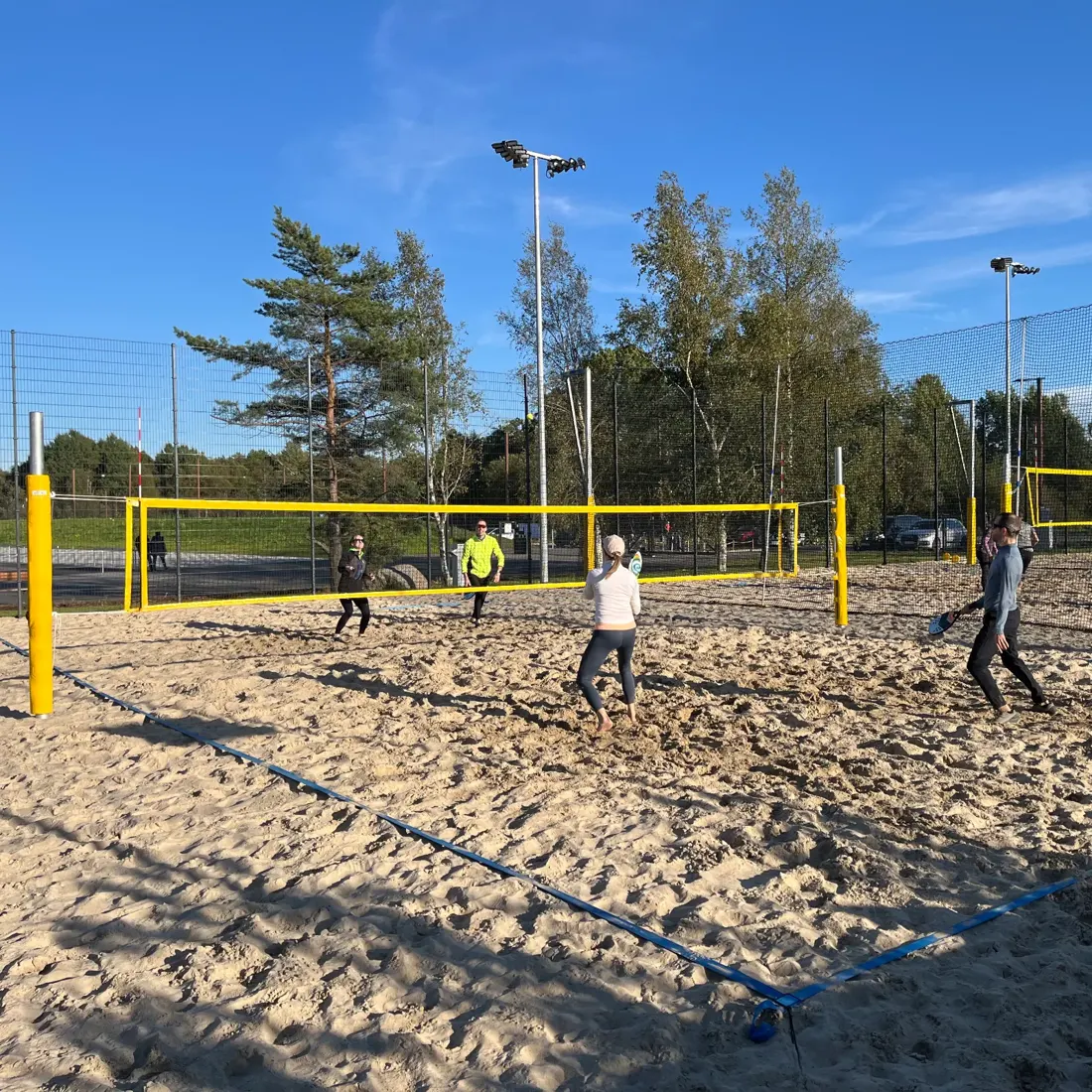
Beach tennis is a fun racket game played over a net. Unlike regular tennis, the ball stays in the air and doesn't bounce, which makes rallies quick and lively. The basic rules are simple, so it suits people who've never played racket sports. It brings a summer mood at any time of year.

Beach tennis rules

Beach tennis combines elements of tennis and volleyball. It's fast, fun and suits beginners and experienced players alike.

Aim of the game
  • Hit the ball over the net so your opponent can't return it.
  • You win a point when the ball lands on your opponent's side or your opponent makes a mistake.
Players
  • Usually played as doubles (2 vs 2).
  • Singles (1 vs 1) is also possible.
  • Doubles is the most common format on the beach and at events.
Court and equipment
  • The court is similar to a beach volleyball court.
  • Recommended size for doubles: about 8 × 16 m.
  • The net is usually about 1.7 m high.
  • Players use beach tennis paddles and a softer tennis ball.
Starting the game
  • The game starts with a serve.
  • The server is chosen by lot or by agreement.
  • The serve is taken from behind the baseline.
  • The serve must go straight over the net to the opponent's side.
  • You may serve underarm or overarm.
Playing the ball
  • The ball must not bounce; it is hit straight back out of the air.
  • Each side gets only one touch (unlike volleyball).
  • The ball may touch the net on its way over, as long as it goes over.
  • You can hit the ball to any part of the opponent's court.
Faults

The point goes to your opponent when:

  • the ball lands on your side
  • the ball goes out of bounds
  • the ball doesn't go over the net
  • a player touches the net during play
  • the same team hits the ball twice in a row
  • the serve goes into the net or out
Scoring

Common options:

Option 1 – tennis style

  • 15 – 30 – 40 – game
  • At 40:40 a deciding point is played

Option 2 – simple scoring

  • Each point counts as one
  • A game is played to, for example, 11 points
  • You must win by at least 2 points
Winning the match
  • Play to an agreed number of games or points.
  • For example: best of three games.
  • The first team to meet the agreed winning condition wins.
Good sportsmanship
  • Respect your opponents and keep the pace going.
  • Take turns serving.
  • If the boundary line isn't clearly visible, decide the point in the spirit of fair play.
Volcage

Volcage

A team game: throw the ring into the basket or around the cone.

OutdoorsHall

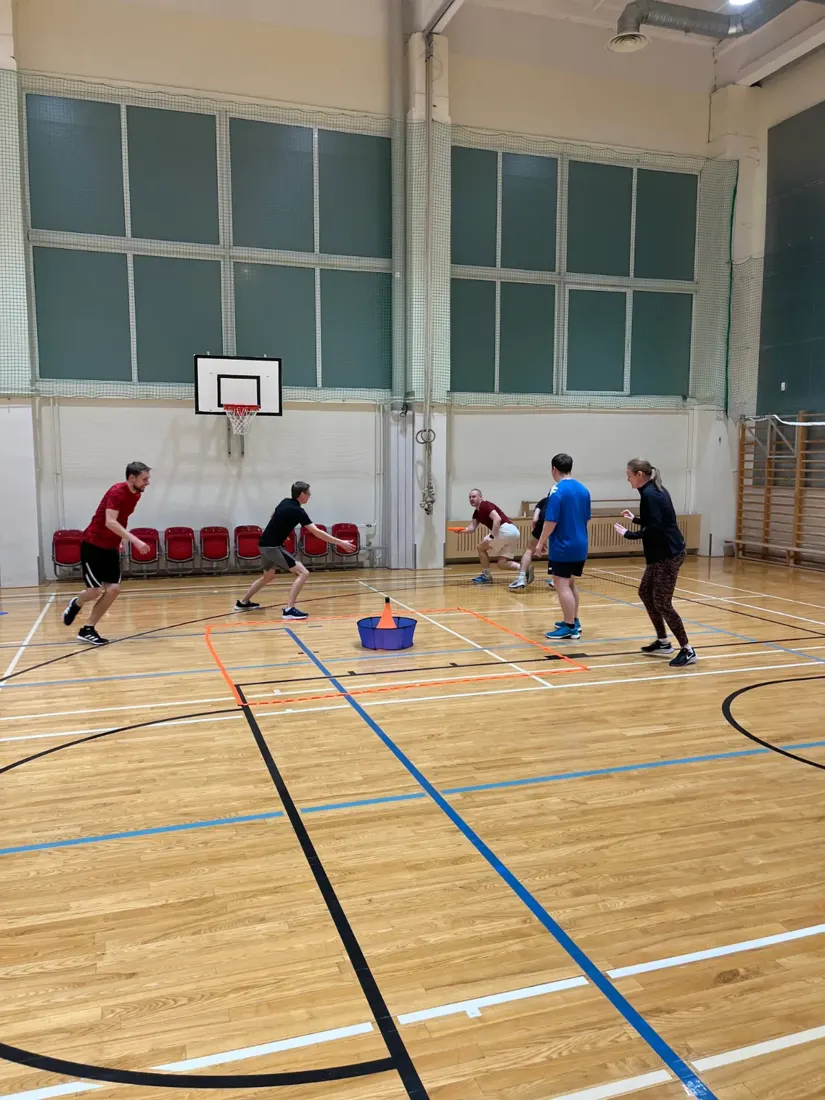
Volcage is an active team game where players pass a ring and throw it into a basket or around a cone to score. The rules are clear within minutes, and it gets more interesting as players try out throwing techniques and tactics. Short rounds and lots of laughter make it a great icebreaker for new groups.

Volcage rules

Aim of the game
  • Work with your team to throw the ring into the basket or around the cone as many times as possible during the game and score points!
Teams
  • Played by 2 teams, each with 3 players + 1 substitute.
Game length
  • A game lasts 15 minutes, split into 3 periods of 5 minutes.
  • There's a 2-minute break between periods.
Scoring
  • You score when the ring goes into the basket (1 point) or around the cone (3 points).
  • Who attacks first:
    • Decided with a toss, like a coin toss: the ring is thrown into the air.
    • One team picks "front" (the side of the ring with the Volcage logo) and the other "back".
    • The side the ring lands on decides which team starts the attack.
  • At the start of each new period, the other team gets to attack first.
Attack (with the ring)
  • An attack always starts from one of the four blue base markers.
  • You may not throw at the basket directly from a base marker.
  • Foot rule:
    • While holding the ring you may not move your feet (pivoting on one foot is allowed).
  • Passing:
    • The ring must be thrown to a teammate; handing it over is not allowed.
    • There's no limit on passes, but at least three passes (including the pass from the base marker) must be made before a shot at the basket.
  • Time:
    • You may hold the ring for at most 10 seconds (an opponent may count out loud if needed).
    • If the 10-second rule is broken, the ring is put down and the other team starts an attack from the nearest base marker.
  • Continuing play:
    • If the ring falls to the ground, possession goes to the defending team, which starts an attack from the nearest base marker.
  • No-throw zone (orange square):
    • You may not throw from inside the no-throw zone.
    • If you pick the ring up in the zone, you must pass it to a player outside the zone.
    • An attacker on the edge of the zone has 5 seconds to throw.
  • Jump shots:
    • You may jump and tip the ring straight into the basket before it touches the ground (without catching it).
  • Contact with a defender:
    • If a defender touches the ring before it lands in the basket or around the cone, the attacking team gets the point.
  • Catching the ring:
    • If a defender and an attacker catch the ring at the same time, the attacker keeps possession.
Defence (without the ring)
  • Winning possession:
    • By intercepting, or when the ring falls to the ground (no physical contact allowed!).
  • Defending rules:
    • Two or more defenders may not guard the same attacker.
    • Defenders may not enter the no-throw zone.
    • An attacker may stretch out an arm to keep a defender away if the defender is too close.
  • Interceptions:
    • If a defender catches the ring before it falls and it doesn't touch the ground, play continues straight away with the roles switched.
    • If the ring falls to the ground, the attack must start from a base marker.
Faults and violations

Faults that lead to loss of possession or a penalty:

  • Handing the ring over (without throwing).
  • Entering the no-throw zone (defender) or throwing from the no-throw zone (attacker).
  • A defender intercepting inside the no-throw zone.
  • A defender jumping over or touching the no-throw zone.
  • A defender blocking or touching the attacker's arm.
  • More than one defender guarding the same player.
  • An attacker moving while holding the ring (except pivoting on one foot).
What happens after a violation:
  • After a violation, the other team starts an attack from the nearest base marker.
Fair play and penalties
  • When a team (in attack or defence) reaches 5 faults, the other team gets a penalty throw.
  • Penalty throw spot: the blue base marker.
  • Every fault after the 5th gives the opponents another penalty throw.
  • Faults are counted for the team as a whole, not individually.
  • Unsporting behaviour (e.g. disrupting the game) = -1 point for the offending team.
Pitjau

Pitjau

Hit the ball through the ring so your rival can't send it back.

OutdoorsHall

Pitjau is a skill game where you hit a ball through a ring so the other team can't send it back through. It trains hand–eye coordination and touch, and every try lets you improve your technique. The rules are simple and it needs no special fitness, so it works for kids and adults alike.

Pitjau rules

Serving
  • The ball: always serve with a fully inflated ball.
  • Serving height: the ball must be lower than the bottom edge of the orange ring.
  • Serving distance: the ball and your body must be at least 1 metre from the ring.
  • The serve: only one hit is allowed.
  • Attempts: 2 chances to serve.
  • Failed serve: if the ball goes through the ring but touches it, the serve doesn't count; try again.
Up to 3 touches
  • After the serve you have up to 3 touches to hit the ball back through the ring.
  • You may use any part of your body.
  • Example: if your opponent hits the ball onto your chest, that already counts as your first touch.
  • A ball that's hard to reach can often be saved with a kick.
Rebound off the ring
  • If the ball hits the orange ring and bounces back, you get 3 new touches to hit it through the ring again.
  • This can't happen again until the ball has gone through the ring, so only once per player's turn.
Distance and direction of the hit
  • If you hit the ball from closer than 1 metre to the ring, the hit must go straight or upwards.
  • From more than 1 metre away, you may also hit downwards.
Touching the ring
  • If a player touches any part of the ring or its base, they lose the point.
Blocking
  • Blocking is not allowed, either on the serve or during play.
Game formats
1 vs 1
  • Always serve with an inflated ball, at the correct height and distance.
  • Match length: best of three sets, each set to 9 points.
  • Winning a set: you must win by at least 2 points.
  • If the ball touches a wall or other objects, play on.
  • If the ball stops or touches the floor, the player loses the point.
Round the Ring
  • Setup: one player on each side of the ring, with the other players queuing behind them.
  • Play:
    • Serve, and play continues anticlockwise around the ring.
    • Up to 3 touches may be used.
  • Friendly round:
    • Each new round starts with a "friendly round": nobody is out until the server has hit the ball a second time.
    • Once the server hits the ball a second time, the real game begins. If you make a mistake, you leave the court.
  • Final:
    • When 2 players are left, they play 1 vs 1, best of three balls.
    • Once there's a winner, everyone can join in again and the game restarts.
2 vs 2
  • Touch rule:
  • Each team has 3 touches to return the ball.
  • Both players must touch the ball before it's hit back through the ring.
  • Exception for two touches in a row:
  • A player may touch the ball twice in a row if their teammate touches it either before or after.
  • Changing serve:
    • The winning team keeps the serve, but the server must change within the team.
  • Match length:
    • Best of three sets, each set to 9 points.
Enjoy the game, remember the rules and play fair! 🎯
Flingball

Flingball

Throw or bounce soft balls into the trampoline and net targets.

OutdoorsHall

Flingball is a new, lively outdoor game that's popular in the US and now arriving in Europe. You score by throwing or bouncing soft balls into targets using a trampoline and a net. It's fast, easy to learn and great at beach parties, garden parties and summer events, played one-on-one or in teams of two.

Flingball rules

Court and equipment
  • The set includes a trampoline and several soft balls.
  • The trampoline or target is placed in the play area so players can throw, bounce and aim the ball at different scoring spots.
Aim of the game
  • The aim is to score more points than your opponent by throwing or bouncing the ball into the targets.
  • Scoring depends on where the ball lands or how it hits the target.
Scoring (example)
  • 1 point – the ball lands on the trampoline surface.
  • 2 points – the ball goes into the lower target (e.g. the orange ring).
  • 3 points – the ball goes up over the trampoline net.
  • 5 points – the ball goes into the highest or hardest target, the tube.
How to play
  • Players take turns throwing.
  • A team or player throws or bounces the ball at the target and scores accordingly.
  • The game continues until one side reaches the agreed number of points.
Winner
  • The winner is the player or team that first reaches the agreed score (usually 21), or has the most points after the agreed number of rounds.
About the game
  • Flingball is an active, on-the-move game that combines throwing, trampoline bounces and hitting targets, so every game is different and tactically challenging.
  • The difficulty and scoring may vary slightly depending on the set or what the players agree.

And plenty more

Croquet, pushball, mini table tennis and others. Ask for an offer →

Request

Ask for an event offer

Tell us where and when your event takes place. We'll reply by email and put together the games for your event with you.

Or write to us directly:

tere@4sopra.ee

Games you'd like (or leave it to us)
Reviews

What guests say

Posted on Google Google
Gaidi Aasamäe profile picture
Gaidi Aasamäe
13 September 2026
Google star 1Google star 2Google star 3Google star 4Google star 5Trustindex verifies that the original source of the review is Google.
Väga äge koht! 🥳 „4 sõpra“ mänguruumis oli mõnus atmosfäär, palju erinevaid ja lõbusaid seltskonnamänge ning tegevust jätkus kogu õhtuks. Kõik olid väga rahul. Kindlasti soovitame ja tuleksime hea meelega tagasi.
Posted on Google Google
robert põlder profile picture
robert põlder
4 August 2026
Google star 1Google star 2Google star 3Google star 4Google star 5Trustindex verifies that the original source of the review is Google.
Täitsa tore koht ja elamus, hea kogus mänge ja tegevust
Posted on Google Google
Mart Kaar profile picture
Mart Kaar
3 August 2026
Google star 1Google star 2Google star 3Google star 4Google star 5Trustindex verifies that the original source of the review is Google.
Väga mõistlik ajaviitmise koht
Posted on Google Google
Maris Liiva profile picture
Maris Liiva
24 June 2026
Google star 1Google star 2Google star 3Google star 4Google star 5Trustindex verifies that the original source of the review is Google.
Jäime väga rahule, lapsed ei tahtnud kuidagi ära tulla ❤️ teinekordki kasutame võimalust tulla 4 Sõpra mänguruumi. Aitäh!
Posted on Google Google
Mahsa Rezaeipour profile picture
Mahsa Rezaeipour
24 June 2026
Google star 1Google star 2Google star 3Google star 4Google star 5Trustindex verifies that the original source of the review is Google.
We celebrated my husband’s birthday at 4 Sõpra mänguruum and had such a wonderful time! The place was fun, comfortable, and perfect for spending time with friends. Everyone enjoyed the atmosphere, and it made the celebration feel really special. We had so much fun and would definitely recommend it to anyone looking for a great place to celebrate/have fun!
Posted on Google Google
Edith Epler profile picture
Edith Epler
17 June 2026
Google star 1Google star 2Google star 3Google star 4Google star 5Trustindex verifies that the original source of the review is Google.
We had a team event here (10 people) and everyone loved it - we had a lot of fun. There are lots of games to choose from and 4 hours flew by. It is also convenient that the rules of the games are hanged on the walls, so you can easily explore games that you have never played before.
Posted on Google Google
Ingrid Piht profile picture
Ingrid Piht
31 May 2026
Google star 1Google star 2Google star 3Google star 4Google star 5Trustindex verifies that the original source of the review is Google.
​Super koht! Külastasime mängutuba pereringis sünnipäeva pidamiseks ja jäime kõik väga rahule. Ruumid on puhtad ja põnevalt sisustatud, oma söögi-joogi võis kaasa võtta. Tegevust jagus kõigile, nii suured kui väiksemad lustisid täiega ja aeg lendas märkamatult (pikendasime esialgset 4h broneeringut 2h võrra). Omanik on väga vastutulelik, sõbralik ja kiiresti reageeriv. Kindlasti soovitame ja tuleme tagasi kui jälle põhjust on!
Posted on Google Google
Elina Dosnazarov profile picture
Elina Dosnazarov
11 May 2026
Google star 1Google star 2Google star 3Google star 4Google star 5Trustindex verifies that the original source of the review is Google.
Väga super oli kindlasti tuleme veel. Aitäh teile .
Posted on Google Google
Triinliis Hordo profile picture
Triinliis Hordo
5 May 2026
Google star 1Google star 2Google star 3Google star 4Google star 5Trustindex verifies that the original source of the review is Google.
Pidasime oma 13 aastase poja sünnipäeva seal! Ruum oli paraja suurusega, lastel oli tore seltsida, mänge mängida ja omavahel niisama hängida! Kui pidu lõppes ja kohale läksin, uurisin poistelt kuidas mängutuba oli ? Vastusteks oli : tore, lahe ja huvitav! Kindlasti soovitame pidada ka laste sünnipäevasid (alates 12 eluaastast) seal, kelle jaoks tavalised mängutoad on igavad ja soovitakse oma seltskonnaga koos olla ning aega veeta!
Verified by Trustindex
Trustindex verified that these reviews were published on 4 Sõpra mänguruum's Google Business Profile. Learn more
FAQ

Questions and answers

Didn't find your answer? Call 522 0054 or email tere@4sopra.ee.

Can we come without a booking?

No, the room is open by booking only. Booking takes a couple of minutes. We announce open events on Facebook.

How long can we book the room for?

From two hours. For longer, add several time slots to your cart. Want 5 or 7 hours? Email tere@4sopra.ee and we'll set it up.

Is the price per person?

No, the price is for the whole room, however many of you there are.

How many people fit?

Up to 20 people fit comfortably. Two people is fine too; there are games for everyone. For a bigger group, email tere@4sopra.ee and we'll talk.

Is the room private?

Yes. During your booking, nobody else is in the room.

How do cancellations work?

Cancellation is free up to 24 hours before the booking starts. Later cancellations are charged in full.

Can we pay by invoice?

Yes. Email us and we'll invoice your company or you personally.

Can we bring children?

Yes. Little ones enjoy most games too, but to play by the rules we recommend ages 10 and up.

Can we bring our own food and drinks?

Yes, bring them or order delivery. Fridge drinks are 2 € each in cash, coffee and tea are free, and disposable tableware is provided.

Can we extend our time on the spot?

Call 522 0054. If nobody is booked after you, we can usually say yes.

Is the room wheelchair accessible?

There's no ramp or lift; the entrance has a few steps. The room itself is on one level.

Do you sell gift cards?

Yes, in any amount. We send a unique code or a designed gift card straight to the recipient.

Scroll to Top