
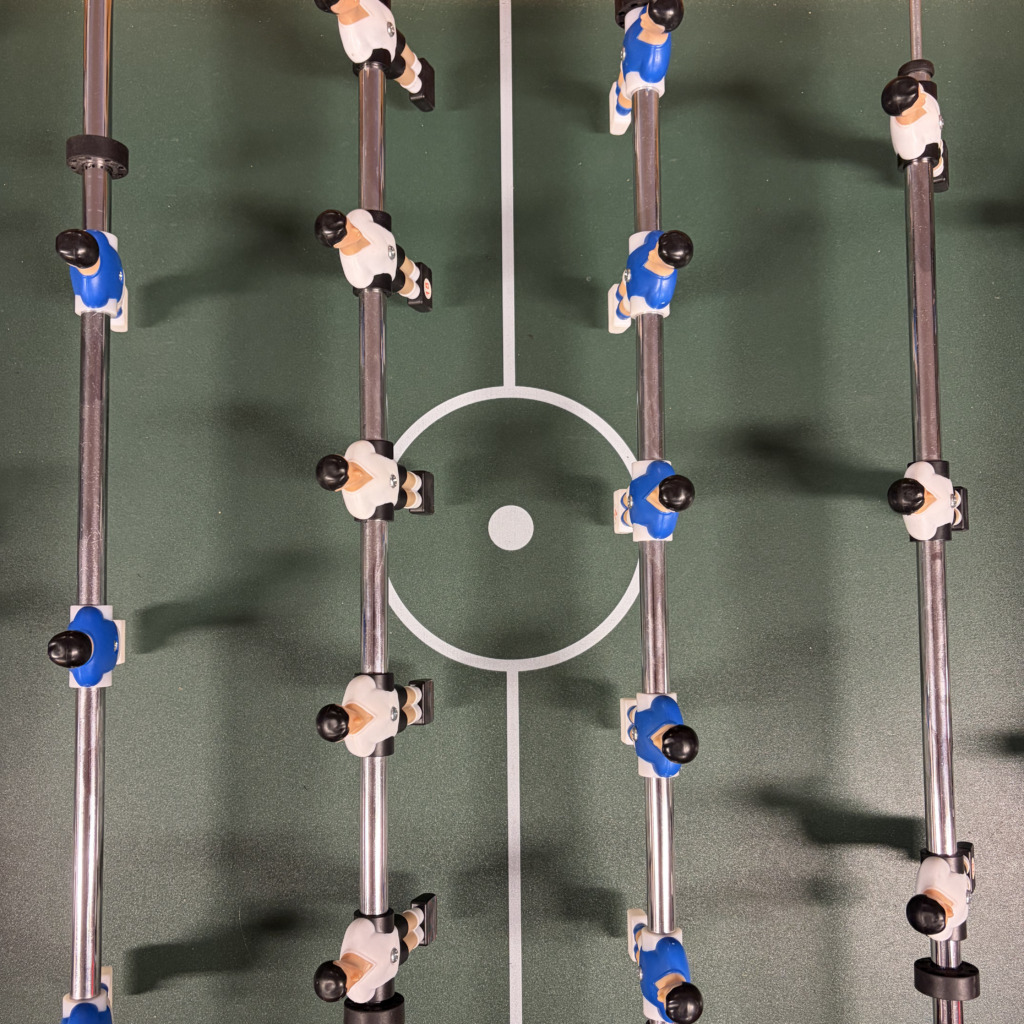
Some games come and go with the trends. And then there are games that stay. Table football clearly belongs to the second group. It has been played in schools, youth centres, pubs, offices and homes for decades, and it hasn’t lost its charm. Quite the opposite: more and more people are looking for activities that genuinely bring people together. That’s exactly where table football comes back into the spotlight.
Table football needs no long introduction. Most people know what it is: a table, rods, little players and a ball you try to get into your opponent’s goal. The rules are simple, but the game itself can become surprisingly fast and emotional. That’s its strength. It suits people who just want to have fun as well as those who take every point seriously.
The game that gets the evening going
In every group there’s someone who says at first that they’re not really a games person. But one tense goal is enough to change the mood. Table football has a way of pulling people in. Cheering happens naturally: shouts, laughter, a bit of friendly teasing. All of this creates energy that ordinary conversation might not.
Often one game is enough for a queue to form. People want a rematch. They want to try a new partner. They want to prove the last defeat was a fluke. It’s exactly this dynamic that makes table football an ideal way to spend time with friends.
If you’re wondering what to do with friends in Tallinn, table football is one of the simplest and surest answers. It needs no special equipment or previous experience. Everyone can start right away.
An experience that connects generations
One of the main reasons table football isn’t going anywhere is that it’s universal. It suits people of all ages. A child can play with a parent. A young colleague can end up on the same team as the company’s manager. A grandparent can surprise everyone with an accurate shot.
The pace of the game and its simple rules put everyone on an equal footing. Physical strength doesn’t decide the outcome. What counts is reaction, teamwork and the ability to read your opponent. That means even a less experienced player can win.
This equality creates a special atmosphere. The roles that usually shape relationships in everyday life fade away. Around the table there’s no boss and no subordinate, just two teams who want to score. It connects people in a way that’s genuine and direct.
Teamwork and team spirit
Table football isn’t just an individual skill game. It’s a doubles game, which means two people have to act together. The roles of attacker and defender alternate. You need to communicate and signal when to pass and when to shoot.
At team events this matters especially. If you’re looking for an activity that really builds team spirit, table football works surprisingly well. Partners who don’t work closely together day to day now have to adapt to each other quickly.
It often turns out that the quieter colleague is a strategic thinker at the table, while someone else stands out with lightning reactions. Moments like these help people see each other in a new light.
Easy to learn, hard to master
One of table football’s biggest strengths is its learning curve. A beginner can play straight away; hitting the ball and defending come naturally. At the same time there’s a whole range of techniques you can practise and improve.
There are precise angle shots, quick spins and sudden bursts. More experienced players develop their own style. Some play aggressively and fast; others wait patiently for the right moment.
This variety keeps the game fresh. Every opponent is different, and every game goes a little differently. That’s why table football doesn’t get boring, even when you play it again and again.
Emotions you remember
There’s something special about the moment the ball slips past the defender and flies into the goal. That moment lasts a second, but the reaction lasts longer: cheers, high fives, jokes.
It’s these emotions that turn a game into an experience. People don’t always remember the exact score, but they remember the feeling. They remember how someone scored the deciding goal in the last second, and how the whole group was cheering along.
In a world where much of our communication happens through screens, table football offers something real: physical presence, face-to-face contact and genuine reactions.
Suits groups of any size
Table football works well for a small group of friends as well as for a bigger event. With two players you can have a one-on-one duel. With four you already have a proper team game.
With a bigger group you can organise a tournament: draw the pairs, keep score and move on to the semi-finals and the final. That adds excitement and structure.
The tournament format works especially well at birthdays and company events. People can take turns playing and cheering, which keeps everyone involved.
Physical and mental balance
Although table football isn’t an intense workout, it still gets you moving: quick reactions, hand work and concentration. It’s a good change from a day spent sitting at a desk.
At the same time the game develops strategic thinking. When should you take a risk? When should you hold your defence? How do you break your opponent’s pattern? Questions like these get your brain working.
This combination makes table football a game that offers more than it seems at first glance.
Nostalgia and rediscovery
Many adults associate table football with their youth: school breaks, evenings at the youth centre, the first matches with friends. When they step up to the table again, that feeling comes back.
The younger generation, on the other hand, is discovering the game fresh. For them it isn’t nostalgic but new and exciting. This meeting of past and present creates an interesting dynamic.
It’s an experience that suits places where different people come together, whether that’s a family gathering, a birthday or a team event.
Table football as part of a wider games culture
Looking at today’s entertainment landscape, people are increasingly looking for active ways to spend their time. Simply sitting and watching no longer offers enough. People want to experience, take part and contribute.
Table football fits this trend perfectly. It isn’t just a pastime; it’s part of a playful culture where conversation, movement and competition come together.
Together with other social games, it creates an environment where people can be truly present, and where laughter and emotions come naturally.
Why this game is here to stay
Table football’s strength doesn’t lie in technology or trendiness. Its strength is simplicity: a clear goal, teamwork and emotion.
It’s a game that doesn’t need constant updates. It works because it brings people together, and that’s exactly what more and more people are looking for.
If you ask which party game connects generations, table football is one of the clearest answers. It’s timeless. It’s accessible. It’s fun.
And most importantly, it creates moments that people remember long afterwards.